Candidate Sourcing Services: How to Find Top Talent

Dialflo: AI Voice Agent
May 20, 2026
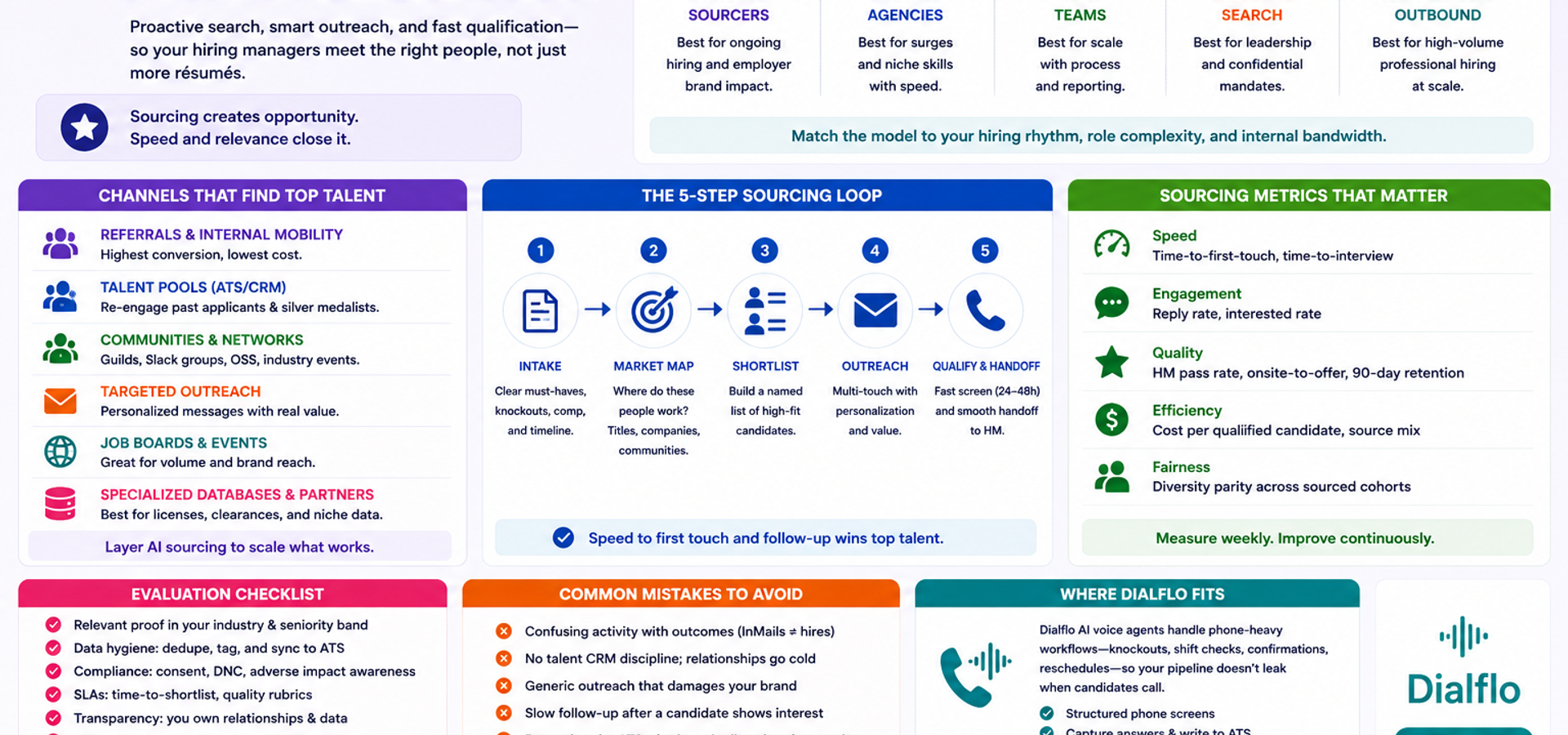
Posting a job and hoping the right person applies is a lottery, especially for scarce skills, leadership roles, and high-volume frontline hiring where speed decides who gets hired. Candidate sourcing services exist to shrink that gap: proactive search, structured outreach, and qualification before your hiring manager’s calendar fills with mismatched interviews.
This guide explains what sourcing services are, which model fits your team, which channels actually surface top talent, how to evaluate providers without demo theater, and what to measure. For AI-assisted discovery, read AI sourcing: how to find candidates faster. For systems that hold pipeline truth, see ATS SaaS: what it is & best platforms and CRM for HR.
What candidate sourcing services actually do
Sourcing is the work of finding and engaging people who could fit an open role, whether or not they applied today. Candidate sourcing services can be:
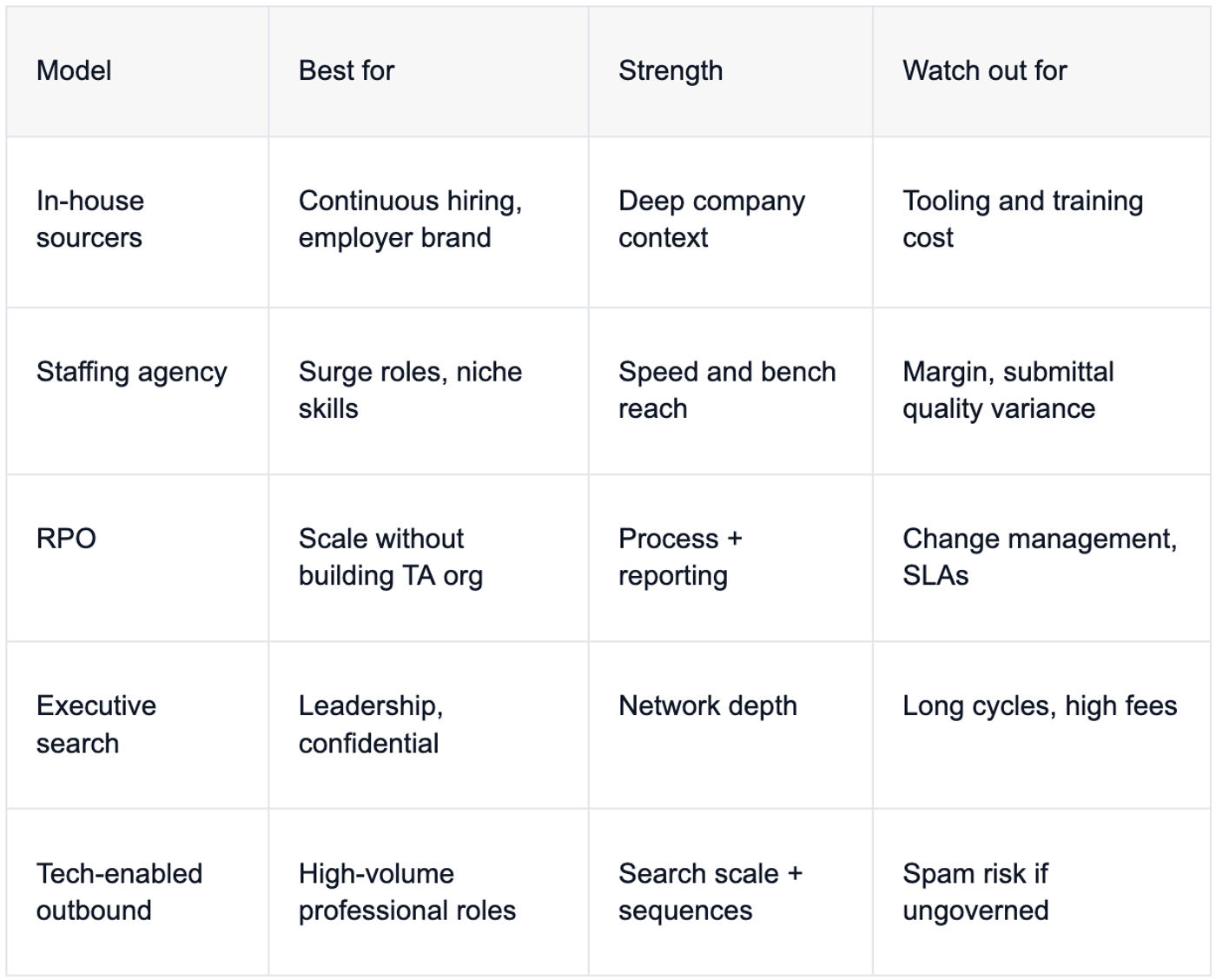
- In-house sourcers on your TA team
- Staffing and search agencies with niche networks
- RPO (Recruitment Process Outsourcing) teams running part or all of hiring
- Embedded specialists (contract sourcers for a product launch)
- Technology-enabled programs combining databases, automation, and human review
The service is not “more LinkedIn tabs.” It is repeatable pipeline creation with ownership, compliance, and CRM/ATS hygiene.
Sourcing services vs job posts: why both matter
Inbound applications scale brand awareness; outbound sourcing targets people who will never click apply. LinkedIn’s talent research consistently shows that hiring outcomes depend on proactive engagement and candidate experience, not only req visibility. Source: LinkedIn: Future of Recruiting 2025.
Top talent, especially employed performers, often needs a credible reason to talk. Sourcing services craft that reason with role clarity, timing, and respectful persistence.
Comparison table: sourcing service models
Channels that find top talent (ranked by leverage)
1) Referrals and internal mobility
Highest conversion, lowest mystery. Formalize referral bonuses and mine alumni who left on good terms.
2) Talent pools in your ATS/CRM
Silver medalists and past applicants are pre-qualified relationships, reactivate before cold outreach.
3) Professional networks and communities
Industry Slack groups, OSS contributors, conference speakers, guilds, not only generic profile search.
4) Targeted outbound sequences
Short, specific messages tied to scope and growth, personalized at the sentence level, not mail-merge noise.
5) Job boards and events
Useful for volume and brand; supplement with sourcing for hard reqs.
6) Specialized databases and partners
Healthcare licenses, security clearances, trades, niche data beats generic boolean when compliance matters.
Layer AI sourcing on channels 2–4 when briefs are structured and outcomes are labeled, see the dedicated AI sourcing playbook.
How to find top talent: the five-step sourcing loop
Step 1: Intake that hiring managers respect. Must-haves, knockouts, comp band, timeline, interview plan. Vague reqs produce generic slates.
Step 2: Market map. Where do these people work today? Titles, companies, communities, geographies.
Step 3: Build a named shortlist. Quality over list size; 30 strong names beat 300 maybes.
Step 4: Multi-touch outreach with value. Role, team, problem, process, timing, then follow-up with new information, not “just bumping.”
Step 5: Fast qualification and handoff. Phone or structured screen within 24–48 hours of interest. Slow handoffs lose top talent to faster employers.
SHRM’s talent acquisition resources emphasize cross-functional hiring process discipline, sourcing services should plug into that process, not bypass it. Source: SHRM: Talent acquisition toolkit.
Evaluating candidate sourcing services (buyer checklist)
- Relevant proof: placements or pipelines in your industry and seniority band, not generic logos.
- Data hygiene: how they dedupe, tag, and write to your ATS.
- Compliance: outreach consent, DNC, regional rules, adverse impact awareness for scored lists.
- SLAs: time-to-shortlist, time-to-first-touch, submittal quality rubric.
- Transparency: you own candidate relationships and records at contract end.
- Metrics cadence: weekly funnel review, not monthly surprise decks.
Metrics: prove sourcing finds top talent
- Speed: time-to-first-touch, time-to-interview
- Engagement: reply rate, interested rate
- Quality: HM pass rate, onsite-to-offer, 90-day retention proxy
- Efficiency: cost per qualified candidate, source-of-hire mix
- Fairness: demographic parity across sourced cohorts (with legal review)
Align metrics with recruitment analytics thinking so sourcing does not live in a spreadsheet island.
Common mistakes when buying or building sourcing services
- Confusing activity with outcomes (InMails sent ≠ talent found).
- No talent CRM discipline, relationships die when reqs close.
- Generic outreach that damages employer brand.
- Slow follow-up after a candidate shows interest.
- Bypassing the ATS, shadow pipelines break reporting and compliance.
Unique angle: top talent is a speed + trust problem
The best candidate sourcing services do not hoard secret databases. They combine relevant market maps, credible outreach, and operational speed so interested candidates meet a human or structured screen while motivation is high. Tools amplify; judgment and follow-through win.
Where Dialflo fits: after sourcing creates phone interest
Dialflo is not a sourcing database. It executes phone-heavy next steps, knockout questions, shift checks, interview confirmations, when candidates call back instead of replying by email. Pair sourcing services with voice automation so pipeline value does not leak at the first ring. Context: hire candidates faster with AI tools, AI applicant screening, and AI in recruitment: complete guide.
FAQ: candidate sourcing services
What are candidate sourcing services?
Proactive talent identification and engagement, internal teams, agencies, RPO, or tech-enabled programs feeding your hiring stack.
How do they find top talent?
Referrals, pools, communities, targeted outbound, and fast qualification, not job-post-only strategies.
Agency or in-house?
Agency/RPO for surge and niche reach; in-house for continuous hiring and data ownership; many blend.
What metrics matter?
Time-to-touch, conversion rates, source-of-hire, cost per qualified candidate, quality proxies.
How is sourcing different from job posts?
Sourcing pursues people proactively; job posts capture inbound interest. Run both.
How does Dialflo help?
Voice agents handle structured phone follow-up after sourcing generates interest.
Closing: source with intent, measure like revenue
Candidate sourcing services improve hiring when they deliver named, qualified, engaged people into a clean ATS pipeline, not when they export bulk profiles. Pick the model that matches your hiring rhythm, govern outreach, measure conversion, and close the speed gap after the first “yes.”
Building a sourcing program? Explore Dialflo for phone workflows that keep top talent moving from interest to interview.


