Dialflo vs Bland AI for US Appointment Booking Workflows

Dialflo: AI Voice Agent
August 3, 2026
Picture the line at 8:57 a.m. Three people want the same Thursday slot. One needs to reschedule. One never confirmed. Your coordinator is already behind, and the phone will not stop. That is the moment most buyers realize vendor selection for voice AI is an operations decision, not a speech-demo contest.
This guide compares Dialflo vs Bland AI for US appointment booking workflows through a practical vendor selection lens: calendar truth, confirmations, reschedules, no-show defense, compliance, cost, and pilot design. Category context: what conversational services are and where they fit.
Why vendor selection fails when you only score “voice quality”
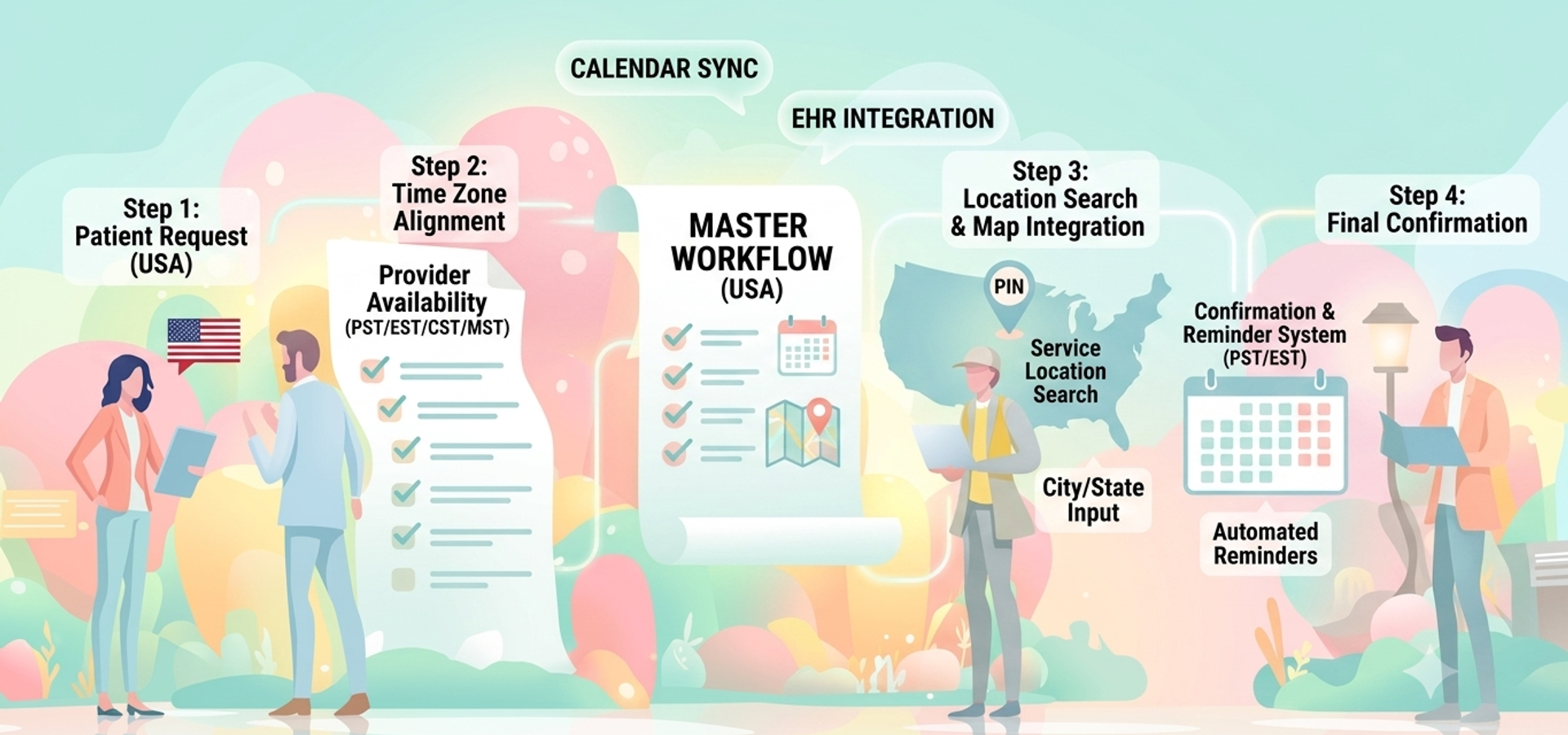
Appointment booking is a closed loop. The agent must capture intent, check real availability, write the booking, confirm it, and handle the inevitable “can we move it?” call, without creating a second shadow calendar your staff has to reconcile.
Speed still decides who wins the first conversation. Classic research on online sales responsiveness showed how quickly interest decays when follow-up lags; see Harvard Business Review: The Short Life of Online Sales Leads. Booking lines face the same physics: after-hours voicemail is not a strategy.
Missed appointments compound the damage. Large clinic research has long documented meaningful no-show variation by service line and population, often cited in the mid-teens to higher depending on setting, see the open-access patterns discussion in Healthcare journal: large-scale no-show patterns. Your vendor selection scorecard should treat confirmation and same-call reschedule as first-class features, not add-ons.
Unique angle: book the slot, then defend the slot
Most comparison posts stop at “can it schedule?” The better question for US teams is: can it defend the slot after it books?
A strong booking agent:
- offers only true availability from your system of record
- confirms identity and appointment type without drowning the caller
- sends confirmation and reminder cadence your ops team owns
- reschedules in the same conversation when life happens
- writes CRM and calendar fields humans trust
- escalates with context when the case is messy
If a platform books beautifully but creates cleanup work for coordinators, you did not buy automation. You bought a new inbox.
What Bland AI typically optimizes for
Bland is a developer platform built around 'pathways': your team designs each step of the call as a node graph and connects scheduling to calendar tools and your own availability APIs.
That shape fits teams with:
- engineering capacity to own pathways, webhooks, and edge cases
- clear calendar APIs and appointment-type rules already documented
- appetite for a platform build where scheduling is a configured node graph
For a wider India-market platform map that includes Bland beside other stacks, see Vapi vs Bland vs Retell for India teams. Even US buyers can steal the evaluation discipline: measure production percentiles, not slide-deck latency.
What Dialflo typically optimizes for
Dialflo is usually evaluated when operations leaders want booking outcomes tied to revenue or capacity, not only a pathway that “can call a calendar.” The emphasis is production voice agents for high-volume conversational work: qualification into a bookable intent, structured write-back, monitoring assumptions, and warm human takeover when the conversation leaves the script.
That shape fits teams with:
- messy real-world call mixes (inbound booking + outbound confirmation + missed-call callbacks)
- CRM and calendar truth that must stay consistent for humans the next morning
- a preference for partner-style rollout over assembling every integration alone
If your buying committee is stuck on build-versus-buy politics, read build vs buy for a voice AI stack, the India framing is specific, but the ownership and total-cost questions travel.
Vendor selection scorecard for US appointment booking
Use these seven dimensions in your Dialflo vs Bland AI bake-off. Score each 1–5 with evidence from a live pilot, not a sandbox script.
1. Calendar truth
Does the agent only offer slots your system will honor five minutes later? Dual-booking and stale caches destroy trust faster than a robotic voice.
2. Confirmation and reminder loops
Can outbound confirmations reschedule on the spot? A reminder that cannot act is just another voicemail.
3. Reschedule and cancel hygiene
Does the agent free the old slot and protect the new one in one conversation, with audit logs your team can defend?
4. CRM and EHR-adjacent write-back
Do dispositions land as structured fields? If coordinators re-type notes, your ROI leaks.
5. US compliance posture
Outbound booking and reminder programs sit near telemarketing rules. Review FCC telemarketing and robocall guidance, then require consent controls, calling windows, recording policies, and retention settings from any vendor.
6. Latency and interruption handling
Callers talk over agents, change dates mid-sentence, and spell names badly. Tail latency matters more than average demo latency.
7. Total cost per kept appointment
Normalize platform fees, telephony, engineering time, QA, and human escalations to cost per kept appointment. Pricing-oriented comparison habits from Retell AI pricing vs Dialflo pricing transfer here: ignore vanity minute rates.
Dialflo vs Bland AI: how to read the tradeoffs without a feature table
A Bland-style build only makes sense when your technical team wants to own pathway design, you already have clean availability APIs, and engineers are dedicated to a well-bounded scheduling workflow.
Choose a Dialflo-leaning path when booking is tangled with qualification, overflow, confirmations, and CRM truth, and your bottleneck is operational reliability more than greenfield pathway authorship.
Force a hybrid honesty check if marketing wants “AI receptionist” language while legal wants audit trails and ops wants same-day capacity fill. Vendor selection fails when those three teams score different demos.
For another Dialflo comparison pattern focused on lead-to-appointment outcomes, see Dialflo vs Retell for real estate lead qualification calls, different industry, same lesson: appointments booked beat minutes dialed.
A fair US pilot design (so vendor selection is evidence-based)
Run both vendors, or sequenced pilots, on the same appointment types for three to four weeks.
- Include peak hours, lunch rushes, and after-hours overflow
- Use real calendar conflict rules (buffers, providers, locations)
- Require same-call reschedule success as a scored event
- Track no-show rate for AI-booked vs staff-booked cohorts
- Shadow QA 10% of calls in week one, then sample weekly
- Keep a human escalation path with full transcript context
Declare a winner on kept appointments and coordinator hours saved, not on who impressed the demo room.
Where Dialflo fits if booking is your bottleneck
If your US team is drowning in booking, confirmation, and reschedule calls, Dialflo focuses on production voice agents that turn conversations into structured next steps. Explore the approach at dialflo.ai, then score Dialflo against Bland with the vendor selection checklist above, not a vibe check.
FAQs
What should vendor selection prioritize for US appointment booking voice AI?
Calendar truth, confirmation and reschedule loops, CRM write-back, US compliance controls, real-speech latency, cost per kept appointment, and ops ownership after the demo.
Is Bland AI or Dialflo better for appointment booking?
If booking is tangled up with qualification, confirmations, reschedules, and CRM updates, and you want your operations team rather than engineers running it, Dialflo is the better fit. Bland suits teams that want to build scheduling pathways themselves. Either way, pilot against your real calendar rules.
What KPIs matter in a Dialflo vs Bland AI booking pilot?
Booked appointments per 100 qualified calls, confirmation completion, same-call reschedule success, post-AI no-show rate, cost per kept appointment, and warm transfer quality.
Do US appointment booking agents need telemarketing compliance?
Outbound confirmations and reminders usually do. Build consent, windows, and recording rules into the RFP before you fall in love with a voice sample.
Can voice AI reduce appointment no-shows?
Yes when it confirms, reschedules live, and updates the calendar cleanly. No when it only sprays reminders into voicemail. Treat no-show change as a measured KPI.
How long should a vendor selection pilot run?
At least three to four weeks across varied hours and locations. Short demos hide concurrency pain and calendar edge cases.