AI Voice Agent for Collections Reminder Calls (SMB)

Dialflo: AI Voice Agent
August 26, 2026
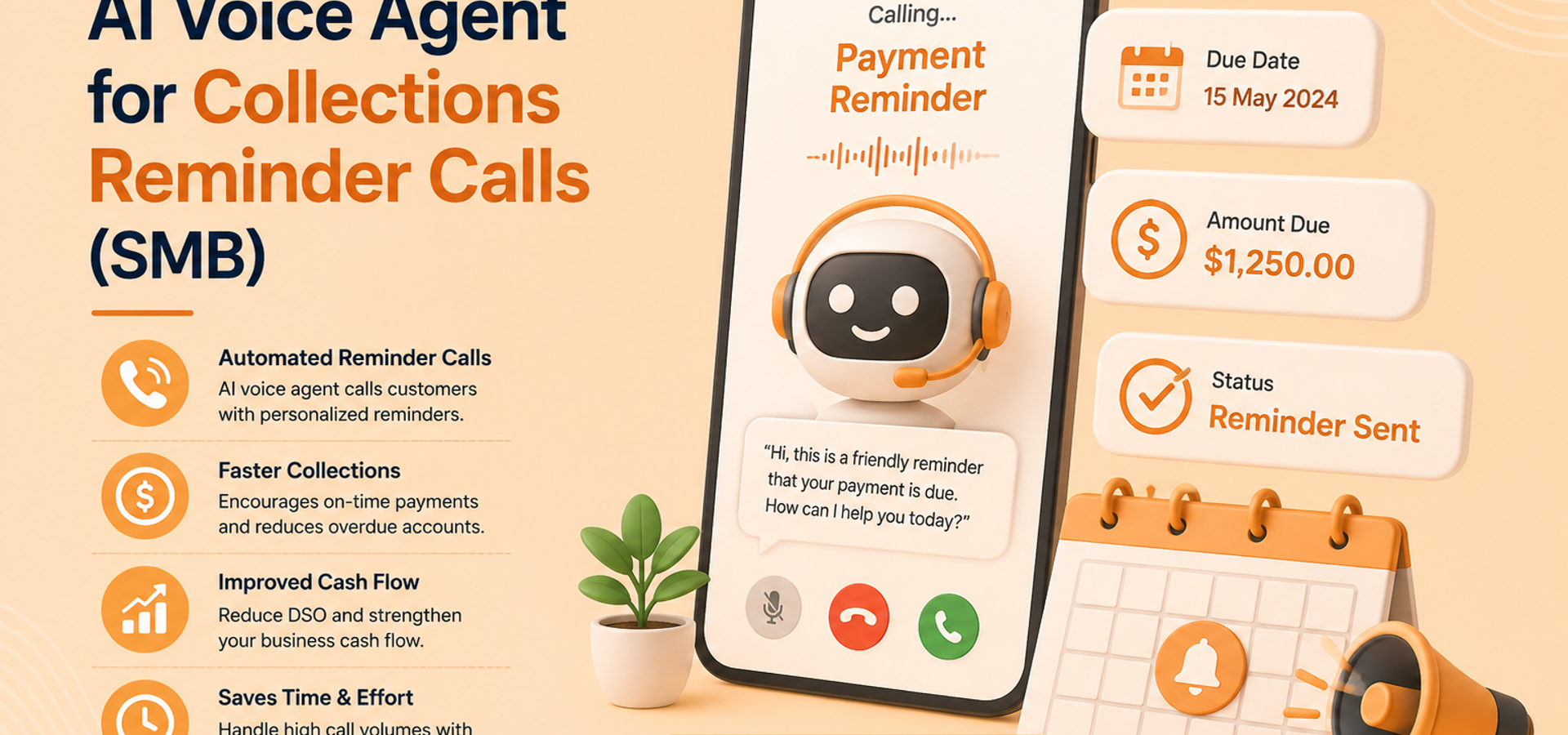
Short answer: An AI voice agent for collections reminder calls lets SMBs run consistent, polite first-party follow-ups on overdue invoices without hiring another full-time AR dialer. The agent confirms the invoice, captures a promise-to-pay date, logs the outcome, and escalates disputes. Humans still handle negotiation, hardship, and legal steps.
It is 5:40 p.m. on the last Thursday of the month. Your aging report shows forty-one invoices past due. Two are big enough to matter for payroll timing. Your office manager already spent the morning on delivery exceptions and vendor calls. The reminder list waits. Again. By next Tuesday those same invoices are older, colder, and more likely to become “we will look into it” tickets instead of paid cash.
That gap between knowing who owes you and actually touching every account is where SMB cash flow leaks. An AI voice agent for collections reminder calls closes the gap with scheduled outreach, clean notes, and escalation rules. For how conversational systems fit broader phone workflows, see conversational services use cases.
Why SMB collections reminder calls break down
Late payment is not a rare edge case in B2B trade credit. Atradius’s U.S. Payment Practices Barometer reports overdue invoices affecting a large share of credit-based B2B sales, with companies adjusting credit policies to protect liquidity. Source: Atradius: B2B payment practices trends in the US 2025.
Inside an SMB, the operational pattern is familiar:
- Email reminders go out. Many are ignored.
- Phone follow-up works better on higher balances, but nobody has time to dial every day.
- Notes live in spreadsheets, inboxes, or someone’s memory.
- Disputes surface late, after the invoice has already aged.
- Key accounts get attention. Small balances quietly rot.
Industry AR surveys also keep ranking phone as a strong escalation channel after email, especially for known contacts and meaningful invoice values. Source overview: Chaser: accounts receivable stats. The problem for SMBs is not knowing that calls work. The problem is staffing enough consistent calls.
What an AI voice agent actually does on a collections reminder call
This is first-party reminder automation, not a debt-collection agency replacement.
A well-scoped SMB voice agent typically:
- pulls open invoices from accounting, CRM, or billing export
- calls during allowed windows with a clear company identity
- states invoice number, amount, and days past due in plain language
- offers to resend the invoice or payment link by SMS/email when permitted
- captures promise-to-pay date, payer name, and partial-pay intent
- tags disputes (pricing, POD, service quality) and routes to a human
- writes disposition codes back to your system of record
- stops outreach when paid, promised, disputed, or do-not-call flagged
It should not threaten, shame, invent fees, or negotiate settlements outside your playbook. Those moments belong to a person.
Where AI reminder calls beat manual dialing for SMBs
1. Consistency beats heroics
Cash recovery is highest early. When day-3 and day-10 reminders slip because the team is busy, you pay later in DSO and write-off risk. An agent runs the cadence even during peak ops weeks.
2. Coverage across the long tail
Humans prioritize the five biggest invoices. AI can still touch the thirty smaller ones that collectively stall cash.
3. Cleaner CRM and AR notes
“Left voicemail” scribbles do not help month-end. Structured dispositions do: contacted, promised, disputed, wrong number, callback requested.
4. Lower cost per successful reminder outcome
Compare all-in voice spend against promises kept and dollars collected in early buckets, not against the cheapest published minute rate. Pricing context: Retell AI pricing vs Dialflo pricing and Retell vs Dialflo India pricing.
A practical SMB collections cadence you can automate
Keep the first thirty days first-party, polite, and factual.
- Day -3 to 0: friendly upcoming-due notice (email/SMS). Voice optional for high-value accounts.
- Day +3: first voice reminder if unpaid. Confirm receipt of invoice. Offer resend.
- Day +10: second reminder. Ask for expected pay date. Capture promise.
- Day +20: firmer reminder still inside your tone guide. Offer human callback for disputes.
- Day +30: human collector review. Pause AI on sensitive accounts. Decide hardship path, payment plan, or formal escalation.
Logistics, field-service, and wholesale SMBs often layer status or POD checks into dispute intake so AR is not guessing why payment stalled. Related ops angle: AI in logistics use cases and logistics decision gap and AI operations.
Script principles that protect relationships
- Identify the company and purpose in the first sentence.
- Use invoice facts, not guilt.
- Ask one clear next step: pay date, transfer to AP, or dispute reason.
- Confirm callback numbers and email spelling.
- Offer a human immediately when the caller is upset or the balance is strategic.
- Never invent late fees, legal threats, or credit consequences the business has not approved.
The goal is paid invoices and intact accounts, not “won” arguments.
Systems map: what must connect before you dial
- Source of truth for open AR (QuickBooks, Zoho Books, ERP, billing export)
- Customer phone hierarchy (AP contact first, then main line)
- Payment link or portal URL rules
- Disposition fields and promise-to-pay date field
- Suppression list: paid, bankrupt, legal hold, VIP do-not-auto-dial, wrong-party
- Escalation queue owner for disputes
If your stack choice is still open, read build vs buy voice AI stack in India and Retell vs Dialflo vs Vapi India before locking architecture.
Compliance and risk basics (not legal advice)
Automated collections calls sit in a regulated zone. Requirements differ by market, industry, and whether you are collecting your own receivables versus acting as a third-party collector.
Before launch, have counsel confirm at least:
- consent and disclosure language for AI or recorded calls where required
- permitted calling hours and frequency caps
- do-not-call and stop-request handling
- right-party contact rules
- data retention for recordings and payment details
- whether third-party collection licensing applies to your use case
Operationally, start with first-party reminder language on early aging only. Keep aggressive recovery offline and human.
KPIs that prove the voice agent is working
- Accounts touched per week in 1-30 and 31-60 day buckets
- Right-party contact rate
- Promise-to-pay rate and promise kept rate
- Cash collected in early buckets versus baseline month
- DSO trend for the piloted customer segment
- Dispute capture within first two touches
- Human hours spent on dialing versus exception handling
- Cost per successful reminder outcome (all-in spend / kept promises or collected invoices)
If those numbers are not in writing before kickoff, you will argue about “tone” at week four instead of cash.
30-day SMB pilot outline
- Week 0: baseline DSO slice, top dispute reasons, approved script, suppression list
- Week 1: 50 to 100 low-risk accounts, daytime windows, daily audit of 20 calls
- Week 2: fix wrong amounts, bad numbers, weak handoffs; do not expand scope
- Week 3: add one more aging slice or one more business unit
- Week 4: go/no-go on promise kept rate, cash movement, and complaint rate
Next steps
An AI voice agent for collections reminder calls will not replace judgment. It replaces the empty hours where nobody dialed. For SMBs, that is usually the difference between invoices that pay in week one and invoices that haunt month-end.
If you want a polite first-party reminder workflow with promise capture and system write-back, talk to Dialflo. Bring one aging report and one approved script. We will help you pilot the cadence before you scale.
Frequently asked questions
What is an AI voice agent for collections reminder calls?
An automated phone agent that runs first-party overdue invoice reminders, captures pay commitments, logs outcomes, and escalates disputes to humans.
Can SMBs use this without a large AR team?
Yes. The point is consistent early reminders at scale while humans focus on exceptions and key accounts.
Will it hurt customer relationships?
Not if tone, accuracy, and escalation rules are tight. Poor data and aggressive scripts will. Good first-party reminders usually beat long silence.
What KPIs matter most?
Contact quality, promises kept, early-bucket cash, DSO movement, dispute capture, and cost per successful outcome.
Is this legal everywhere?
No universal answer. Confirm consent, timing, disclosure, and collection rules with counsel before dialing. This post is not legal advice.
How does Dialflo help?
Dialflo supports AI voice workflows for reminder calls and exception routing so SMB AR teams collect more consistently. Start at dialflo.ai.