AI Interview Bot vs AI Phone Screen for Recruiting

Dialflo: AI Voice Agent
August 20, 2026
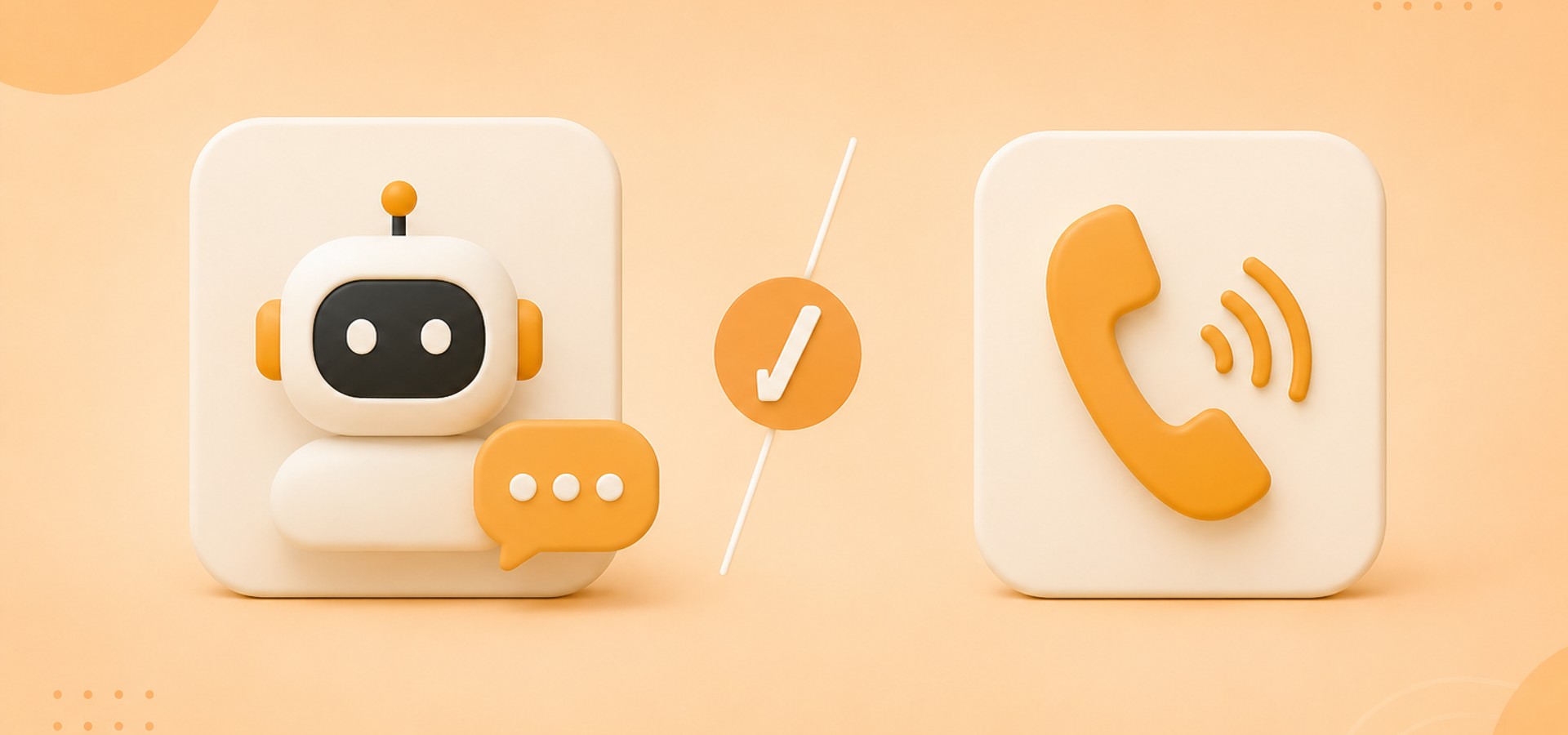
Recruiting teams have more ways to automate candidate screening than ever before.
AI interview bots can conduct structured interviews through chat or video interfaces. AI phone screens can speak with candidates over the phone, ask questions, capture responses, and qualify applicants without requiring a recruiter to make every initial call.
Both can reduce repetitive recruiting work.
But they solve slightly different problems.
The question for staffing agencies, recruiting teams, and growing companies isn't simply AI interview bot vs AI phone screen.
It's:
Which candidate conversations should happen through chat or video, and which are better handled through a phone call?
For high-volume recruiting, understanding that difference can help teams choose the right automation strategy.
What Is an AI Interview Bot?
An AI interview bot is a software system that interacts with candidates through a digital interface.
Depending on the platform, it may conduct:
- Pre-screening
- Text-based interviews
- Video interviews
- Structured assessments
- Technical questions
- Behavioral questions
- Candidate evaluations
- Interview scheduling
A candidate may receive a link, open the interview interface, and answer a predefined set of questions.
The AI can then analyze responses and provide structured information to recruiters.
This makes interview bots useful when the hiring process requires candidates to complete a more formal assessment.
What Is an AI Phone Screen?
An AI phone screen uses a conversational voice agent to conduct an initial recruiting conversation over the phone.
Instead of asking a candidate to open a link, the AI can call the candidate directly.
A typical conversation might look like:
"Hi Rahul, I'm calling about the warehouse supervisor position you applied for. Is now a good time for a quick screening?"
The agent can then ask questions about:
- Work experience
- Location
- Availability
- Salary expectations
- Shift preferences
- Skills
- Certifications
- Notice period
- Work authorization
- Interest in the role
The responses can be captured and passed back to the recruiting team.
Dialflo supports AI voice workflows for recruiting and staffing, including automated candidate conversations and phone screening.
1. Candidate Experience
Candidate experience is one of the biggest differences.
An interview bot usually requires the candidate to take an action.
They may need to:
- Open an email.
- Click an interview link.
- Create or access an account.
- Check device compatibility.
- Complete the interview.
That can work well for candidates who are already engaged.
An AI phone screen removes several of those steps.
The candidate simply receives a call.
For hourly workers, frontline employees, drivers, healthcare workers, warehouse employees, and other high-volume roles, this can make the screening process more accessible.
A phone conversation can also feel more familiar than completing a long online assessment.
2. Speed to First Contact
Recruiting is highly time-sensitive.
A candidate who applies today may apply to several other jobs tomorrow.
The faster a recruiting team can contact a qualified applicant, the better.
An AI phone screen can be triggered shortly after an application is received.
The workflow can look like:
Application → Eligibility check → AI phone screen → Qualification → Recruiter review
This can dramatically reduce the time between application and first conversation.
Dialflo's recruiting workflows focus on automating repetitive candidate conversations and phone screening, helping recruiting teams handle high application volumes without adding proportional recruiter headcount.
For more detail, see automate recruiting phone screens without adding recruiters.
3. Passive Candidates
This is one area where AI phone screens have a meaningful advantage.
Interview bots generally work best when a candidate is already participating in the recruiting process.
Passive candidates may not want to:
- Open an interview link
- Complete a lengthy questionnaire
- Create another account
- Sit through a digital assessment
A phone call can create a lower-friction first conversation.
A recruiter or AI agent can reach out and ask:
"Would you be open to hearing about a new opportunity?"
If the candidate is interested, the conversation can continue.
This makes AI phone screens particularly relevant for recruiting agencies and sourcing teams.
Recruiters exploring automated sourcing can also see AI sourcing and how to find candidates faster.
4. Structured Interviews
AI interview bots can be excellent for structured interviews.
Recruiters can define:
- Questions
- Scoring criteria
- Time limits
- Evaluation categories
- Required answers
- Assessment rules
Every candidate can receive the same questions.
This can improve consistency across large candidate pools.
AI phone screens can also use structured questions.
For example:
Question 1: How many years of experience do you have?
Question 2: Are you comfortable working night shifts?
Question 3: What is your expected salary?
Question 4: How soon can you join?
Question 5: Are you willing to relocate?
The difference is primarily the interaction channel.
The phone-based approach makes the experience conversational rather than form-based.
Structure is what makes screening comparable across candidates. Google's re:Work guide to structured interviewing explains how to write consistent questions and rating scales, and both AI formats work best when they follow one.
5. Candidate Qualification
For early-stage recruiting, you don't necessarily need a full interview.
You may simply need to know whether the candidate meets basic requirements.
For example:
Role: Delivery Driver
The AI could verify:
- Valid driving license
- Years of experience
- Location
- Availability
- Shift preference
- Expected compensation
If the candidate meets the requirements, the recruiter receives a qualified lead.
If they don't, the recruiting system can categorize the candidate accordingly.
This is where AI phone screens can produce significant time savings.
Instead of recruiters spending hours making basic screening calls, the AI handles the first layer.
For more examples, see AI applicant screening and how it works.
6. High-Volume Recruiting
Consider a staffing agency receiving 5,000 applications for multiple roles.
A recruiter cannot realistically conduct a manual phone screen with every applicant.
An interview bot can help automate screening.
But an AI phone agent can also initiate conversations and qualify candidates without waiting for them to complete an online interview.
This makes voice automation particularly attractive for high-volume hiring.
Common use cases include:
- Staffing agencies
- BPO hiring
- Healthcare recruitment
- Retail
- Hospitality
- Logistics
- Manufacturing
- Customer service
- Warehouse hiring
- Delivery operations
Dialflo has specifically discussed AI voice screening for staffing agencies in its AI voice screening buyers guide.
7. Multilingual Recruiting
Recruiting teams increasingly hire candidates from diverse linguistic backgrounds.
A digital interview bot may support multiple languages, but the experience depends on the candidate being comfortable using the platform.
Voice can be more natural.
A candidate may prefer to speak rather than type responses or navigate an online assessment.
For organizations hiring across multiple regions, multilingual AI voice screening can therefore become a useful capability.
Dialflo supports multilingual voice AI workflows, making voice-based candidate engagement relevant for recruiting teams serving candidates across different languages and markets.
You can also explore multilingual voice AI for global sales growth to understand how the same voice infrastructure can support multilingual business conversations.
8. Recruiter Handoff
AI should not necessarily make the final hiring decision.
Its strongest role is often to collect information and identify candidates who deserve human attention.
For example:
AI phone screen
↓
Candidate meets requirements
↓
AI schedules recruiter interview
↓
Recruiter conducts deeper interview
↓
Hiring manager interview
↓
Offer
This model lets recruiters focus on candidates who have already passed basic screening.
An interview bot can follow a similar model.
The key difference is that voice AI can potentially escalate during the conversation itself.
For example:
"The candidate has five years of experience and is available immediately. Would you like me to connect you with a recruiter?"
That creates a more dynamic recruiting workflow.
9. Candidate Questions
Recruiting isn't only about asking questions.
Candidates have questions too.
They may ask:
- What is the salary range?
- Where is the job located?
- What are the working hours?
- Is remote work available?
- What benefits are offered?
- How many interview rounds are there?
- When can I start?
An AI phone screen can answer approved questions during the conversation.
This can reduce the need for recruiters to repeatedly answer basic questions.
For complex or sensitive questions, the AI can route the candidate to a recruiter.
10. Scheduling
Both AI interview bots and AI phone screens can support interview scheduling.
But voice agents can make scheduling part of the conversation.
For example:
"Based on your answers, you'd be a good fit for the next round. Would tomorrow at 11 AM or 3 PM work better?"
The candidate chooses a time.
The system can then schedule the interview and update the recruiting platform.
This removes another administrative task from recruiters.
For teams evaluating recruitment technology, must-have ATS features for modern recruiting is useful when considering how AI screening should connect with the broader hiring stack.
11. AI Interview Bot vs AI Phone Screen for Different Recruiting Scenarios
Use an AI Interview Bot When:
- You need structured assessments.
- Candidates are already engaged.
- The role requires detailed responses.
- You need candidates to complete a formal interview.
- Video or written responses are important.
- You want candidates to complete the assessment asynchronously.
Use an AI Phone Screen When:
- You receive large numbers of applications.
- Speed to first contact matters.
- Candidates are difficult to reach.
- You recruit hourly or frontline workers.
- You need to screen passive candidates.
- Phone conversations are more natural for your audience.
- You need multilingual voice conversations.
- You want recruiters to spend less time on initial phone screens.
The Best Option May Be Both
Recruiting teams don't necessarily have to choose one.
A stronger workflow can combine both technologies.
For example:
Application
↓
AI phone screen
↓
Basic qualification
↓
AI interview bot
↓
Structured assessment
↓
Recruiter interview
↓
Hiring manager
This creates multiple layers of automation.
The AI phone agent handles the first conversation.
The interview bot handles deeper structured assessment.
The recruiter focuses on candidates who have already demonstrated basic fit.
This can be especially useful for staffing agencies managing high volumes across multiple job categories.
AI Phone Screen vs Human Recruiter Phone Screen
There is another comparison worth making.
The question isn't only whether AI interview bots are better than phone screens.
It's also whether AI can handle the initial phone screen traditionally performed by recruiters.
A human recruiter may spend 10–20 minutes on a basic screening call.
Multiply that by hundreds of candidates and the workload becomes significant.
An AI voice agent can handle the initial qualification and return structured information to the recruiter.
For example:
Candidate: 3 years of experience
Location: Pune
Availability: Immediate
Salary expectation: ₹6 LPA
Shift: Flexible
Interest: High
Recruiter action: Schedule interview
Instead of spending 15 minutes collecting this information, the recruiter can start with the qualified candidate.
This is the core productivity opportunity.
What About Candidate Quality?
Automation should not mean lowering the screening standard.
The quality of the workflow depends on the questions and criteria.
A weak AI screen might ask generic questions and produce little useful information.
A well-designed workflow should be based on the actual requirements of the job.
For example, a logistics role may prioritize:
- Shift availability
- Location
- Driving experience
- License
- Safety experience
- Start date
A software engineering role may prioritize:
- Relevant experience
- Technical skills
- Availability
- Compensation expectations
- Project experience
The AI should be configured around the role rather than using one generic script for every candidate.
Recruiting teams can also explore AI candidate matching as another layer of recruitment automation.
There is early evidence that AI screening can improve shortlists. In a 2025 study of an AI-assisted hiring pipeline, candidates shortlisted with AI interview information passed final human interviews at rates 17.5 to 20 percentage points higher than candidates shortlisted from résumés alone.
Avoid Using AI for Everything
AI phone screening has clear benefits, but recruiting still requires human judgment.
AI should not be used as a black box to make high-stakes employment decisions without appropriate oversight.
Recruiters should monitor:
- Screening criteria
- Candidate experience
- False negatives
- False positives
- Bias
- Accessibility
- Data handling
- Compliance
- Escalation rules
For more context, see AI bias in hiring: risks, solutions, and best practices.
The goal is to automate repetitive work while keeping humans responsible for important hiring decisions.
Check the rules where you hire. New York City's Local Law 144 requires a bias audit and candidate notice before employers use automated employment decision tools, and the EU AI Act classes AI used to screen or evaluate candidates as high-risk.
How Dialflo Fits Into Recruiting
Dialflo provides AI voice agents that can automate recruiting conversations, including candidate screening and outbound calls.
A typical workflow can be:
Candidate enters ATS
↓
AI agent initiates call
↓
Candidate answers
↓
AI asks screening questions
↓
Responses are captured
↓
Candidate is qualified
↓
Recruiter receives structured information
↓
Interview is scheduled
This can help staffing agencies and internal recruiting teams increase their screening capacity without adding a recruiter for every increase in application volume.
For businesses comparing recruitment automation options, Dialflo also covers AI agents for recruitment and broader recruitment process automation tools and benefits.
Key Metrics to Track
If you implement AI screening, don't measure success only by the number of calls completed.
Track:
- Application-to-contact rate
- Contact-to-screen rate
- Qualified candidate rate
- Recruiter review time
- Interview scheduling rate
- Interview show rate
- Time to first contact
- Time to shortlist
- Cost per screened candidate
- Cost per qualified candidate
- Candidate opt-out rate
- Human escalation rate
- Hiring conversion rate
The ultimate goal is not more conversations.
It is faster movement of qualified candidates through the hiring funnel.
Final Verdict: AI Interview Bot vs AI Phone Screen
There isn't a single winner.
An AI interview bot is better suited to structured, formal, and often asynchronous assessments.
An AI phone screen is better suited to fast candidate engagement, high-volume screening, passive candidate outreach, basic qualification, and conversational recruiting.
For many recruiting teams, the strongest approach is to use both.
AI phone screen for speed.
AI interview bot for structured assessment.
Human recruiter for judgment.
That creates a recruiting workflow where technology handles repetitive conversations while recruiters spend their time evaluating candidates, building relationships, and making hiring decisions.
For staffing agencies and high-volume employers, that distinction can make AI voice screening more than a simple automation tool. It can become a scalable first layer of the recruiting process.
Frequently asked questions
What is the difference between an AI interview bot and an AI phone screen?
An AI interview bot usually runs an asynchronous interview on a web or app link that the candidate completes in their own time. An AI phone screen calls the candidate and holds a live conversation, which suits candidates who are on the move or less likely to open a link.
Which is better for high-volume hiring?
AI phone screens, in most cases. They reach candidates faster, work on any phone, and handle multiple languages, which matters for frontline and blue-collar roles.
Can I use both?
Yes. Many teams use an AI phone screen for first contact and basic qualification, then an interview bot or a recruiter-led interview for deeper assessment.
How does Dialflo fit into recruiting?
Dialflo runs AI phone screens: it calls applicants, asks structured screening questions, answers candidate questions, schedules interviews, and passes qualified candidates to recruiters with notes.
Want to try AI phone screening on your own roles? Book a Dialflo demo to see a voice agent screen candidates and hand the qualified ones to your recruiters.


