AI Shipping Solutions: How AI Is Changing Maritime Logistics

Dialflo: AI Voice Agent
September 16, 2026

The shipping industry manages enormous amounts of information every day. Carriers, freight brokers, 3PLs, manufacturers, ports, warehouses, and customers all depend on accurate shipment information to keep goods moving.
Yet many shipping operations still rely heavily on phone calls, emails, spreadsheets, manual tracking, and repetitive administrative work. As shipment volumes increase, these processes can create delays and place additional pressure on operations teams.
AI shipping solutions are changing how logistics companies manage these challenges. Artificial intelligence can support shipment tracking, customer communication, exception management, carrier coordination, demand forecasting, documentation, and operational workflows.
For shipping companies, the goal is not simply to add AI to existing processes. The bigger opportunity is to use AI to reduce repetitive work, improve visibility, and help operations teams respond to issues faster.
What Are AI Shipping Solutions?
AI shipping solutions are software systems that use artificial intelligence to automate, analyze, or improve different parts of shipping and logistics operations.
Depending on the platform, AI can support activities such as:
- Shipment tracking
- Carrier communication
- Delivery updates
- Exception management
- Customer support
- Freight forecasting
- Route optimization
- Documentation
- Appointment scheduling
- Invoice processing
- Demand planning
- Operational analytics
- Voice-based communication
AI can work alongside transportation management systems (TMS), warehouse management systems (WMS), customer relationship management (CRM) platforms, and other logistics software.
The result is an additional intelligence and automation layer across existing shipping workflows.
Why AI Is Becoming Important in Shipping
Shipping operations involve many moving parts. A single shipment can involve a shipper, carrier, driver, warehouse, consignee, broker, customer service team, and operations manager.
Each participant may need different information.
For example, a customer may want to know where a shipment is, while an operations team may need to know whether the carrier has checked in. A warehouse may need an updated delivery time, while a freight broker may need confirmation from the carrier.
Traditionally, employees collect this information through calls, emails, portals, and manual system updates.
AI can automate many of these interactions.
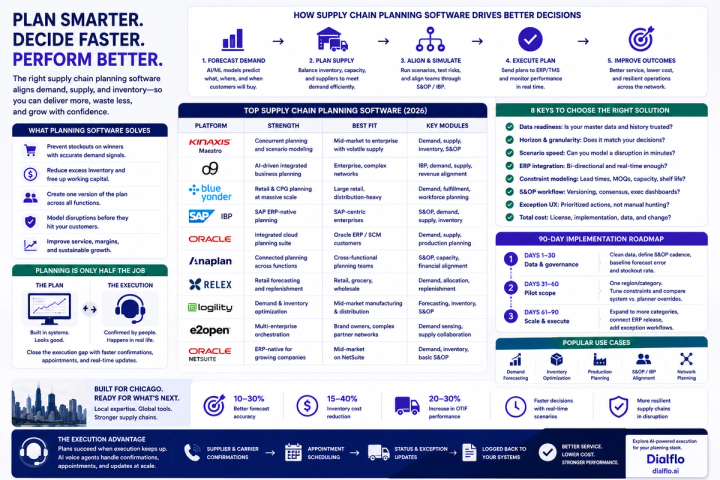
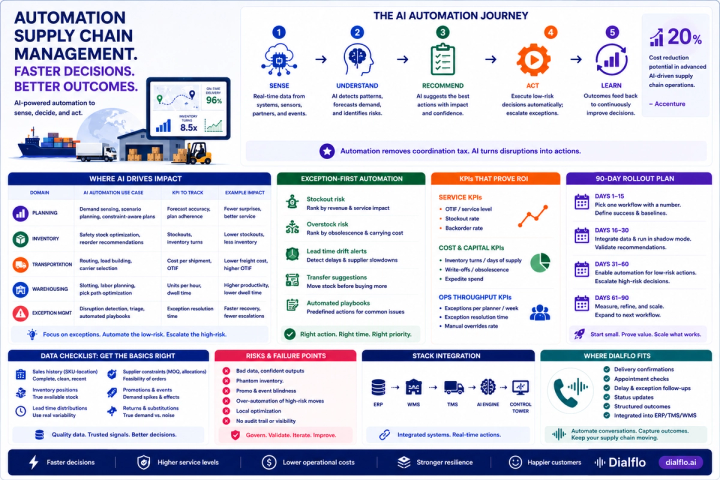
Companies exploring broader logistics automation can also look at how AI is transforming supply chain operations.
The stakes are large: according to UNCTAD, around 80% of the volume of international trade in goods is carried by sea.
Key Applications of AI in Shipping
AI-Powered Shipment Tracking
Shipment tracking is one of the most common areas where AI can improve logistics operations.
Traditional tracking often requires employees or customers to check a carrier portal or contact the carrier directly.
AI systems can consolidate information from available data sources and help provide shipment updates without requiring an employee to manually search for every status.
This becomes particularly valuable when operations teams manage hundreds or thousands of active shipments.
Instead of repeatedly answering "Where is my shipment?" questions, automated systems can provide status information based on the latest available data.
Automated Carrier Communication
Carrier communication is another area where AI can reduce manual workload.
Operations teams frequently contact carriers to ask questions such as:
- Has the load been picked up?
- What is the current shipment status?
- Has the driver arrived?
- What is the estimated arrival time?
- Has the delivery been completed?
- Is there a delay?
- Can the appointment be rescheduled?
These conversations can consume significant amounts of dispatcher and operations-team time.
AI voice agents can handle structured carrier calls and capture the information required by the logistics team.
For example, companies can automate carrier tracking workflows using solutions such as automated carrier check calls.
Delivery Exception Management
Shipping does not always follow the original plan.
Vehicles can be delayed, appointments can change, receiving locations can become unavailable, and shipments can encounter operational issues.
The problem is often not the exception itself but the amount of communication required to resolve it.
AI can help identify exceptions and initiate the next step in the workflow.
For example, an automated system can contact the relevant party, collect updated information, record the response, and notify the appropriate employee.
This allows operations teams to focus on exceptions requiring human intervention instead of manually handling every routine status call.
Customer Communication
Customers increasingly expect real-time information about their shipments.
AI can support customer communication through voice, chat, SMS, or automated notifications.
Instead of waiting for a customer service representative to answer a call, customers can receive information about shipment status, estimated delivery times, appointment details, or other routine updates through automated systems.
This can also help logistics companies provide support outside traditional working hours.
For a deeper look at this use case, see 24/7 voice AI for shipment status calls.
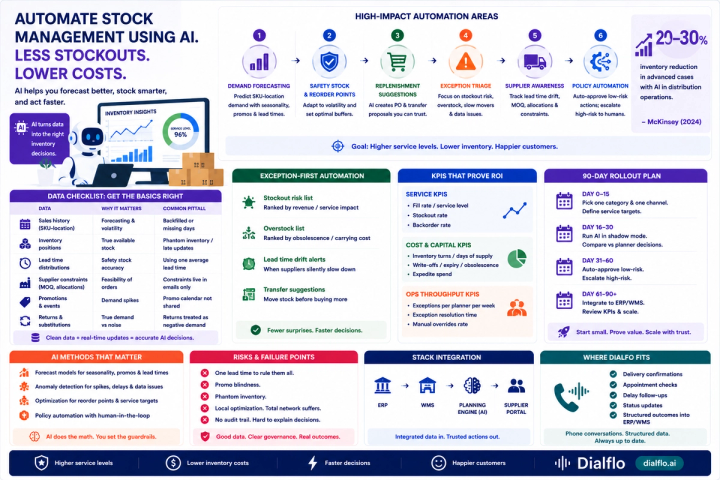
AI for Shipping Forecasting and Planning
Artificial intelligence can also be used before shipments enter the transportation network.
Historical shipment data can be analyzed to identify patterns in demand, transportation requirements, delivery performance, and operational activity.
This can support planning decisions such as:
- Anticipating shipment volumes
- Planning transportation capacity
- Identifying demand fluctuations
- Improving inventory planning
- Allocating resources
- Identifying potential delays
Predictive systems do not eliminate uncertainty, but they can give logistics teams additional information when planning operations.
AI can also help organizations identify recurring patterns that may be difficult to detect through manual analysis.
AI in Shipping Documentation
Shipping generates significant amounts of documentation.
Depending on the type of shipment and transportation mode, teams may work with invoices, bills of lading, delivery documents, customs paperwork, purchase orders, and other records.
AI-based document processing can extract information from documents and reduce repetitive data-entry work.
For example, an AI system may identify shipment numbers, addresses, quantities, dates, carrier information, or other relevant fields.
This information can then potentially be transferred into operational systems or used to trigger downstream workflows.
Reducing manual data entry can help decrease administrative workload and improve the speed of information processing.
AI Cybersecurity Compliance Tools for Maritime Logistics
As shipping companies become more digitally connected, cybersecurity becomes an increasingly important part of technology adoption.
Modern maritime logistics operations can involve vessels, ports, terminals, TMS platforms, cloud applications, IoT devices, communication systems, and third-party technology providers.
This creates a larger digital environment that organizations need to monitor and protect.
AI cybersecurity compliance tools can support security teams by analyzing large volumes of activity, identifying unusual patterns, and helping organizations monitor potential risks.
AI can potentially assist with:
- Threat detection
- Anomaly identification
- Access monitoring
- Security event analysis
- Compliance monitoring
- Risk assessment
- Incident prioritization
However, AI should complement established cybersecurity controls rather than replace them.
Organizations should still maintain appropriate access controls, security policies, employee training, system monitoring, and compliance processes.
Cyber risk is also a compliance item for shipowners. The International Maritime Organization has asked administrations to make sure cyber risks are addressed in ships' safety management systems since 2021, under Resolution MSC.428(98).
AI Voice Agents for Shipping Operations
Voice communication remains important in logistics because many shipping workflows require direct conversations.
Drivers, carriers, dispatchers, warehouses, brokers, and customers may still prefer phone calls for time-sensitive information.
AI voice agents can automate routine conversations without requiring an employee to make every call.
A typical workflow could look like this:
- The logistics system identifies a shipment requiring an update.
- An AI voice agent contacts the carrier.
- The agent asks predefined questions.
- The carrier provides the latest status.
- The AI extracts relevant information.
- The result is recorded or passed into the appropriate workflow.
- A human employee handles the issue if escalation is required.
This approach can reduce repetitive calling while preserving voice communication as part of the logistics workflow.
Companies looking at routine logistics automation can also explore AI voice agents for logistics routine calls.
Benefits of Artificial Intelligence in Shipping
Reduced Manual Work
AI can automate repetitive activities that previously required employees to make calls, check systems, update records, or process documents manually.
Faster Information Collection
Automated systems can collect shipment and carrier information without waiting for an employee to become available.
Improved Operational Visibility
AI can help consolidate information from different interactions and systems, making it easier for teams to understand what is happening across active shipments.
24/7 Communication
Automated voice and digital systems can continue handling routine interactions outside standard operating hours.
Better Scalability
Shipping volumes can fluctuate significantly. AI can provide additional operational capacity without requiring companies to increase headcount at the same rate as shipment volume.
Faster Exception Handling
When an issue occurs, AI can initiate predefined workflows and escalate situations that require human attention.
For example, logistics teams can use automation to reduce repetitive delivery-exception communication through workflows such as reducing delivery exception calls.
Challenges of Using AI in Shipping
AI adoption also comes with challenges.
One of the most important is data quality. AI systems depend on the information available to them. Inaccurate, incomplete, or outdated data can produce unreliable outputs.
Integration is another consideration. AI solutions are more useful when they can work with the systems already used by logistics teams.
Companies should also consider:
- Data security
- Integration requirements
- Human escalation
- AI accuracy
- Compliance requirements
- Vendor reliability
- Implementation costs
- Monitoring and reporting
AI should be introduced around clearly defined operational problems rather than simply because it is a new technology.
How to Choose an AI Shipping Solution
Before selecting a solution, logistics companies should identify the workflows where employees spend the most time.
For example, a company might discover that its dispatch team spends several hours every day handling shipment-status calls.
In that case, an AI voice solution may provide more practical value than a broad AI platform with features unrelated to the company's immediate problem.
Businesses should evaluate:
Integration Capabilities
The solution should work with existing TMS, CRM, ERP, or logistics systems where required.
Workflow Customization
Shipping processes vary between carriers, brokers, manufacturers, 3PLs, and freight forwarders. The AI should support the company's actual workflows.
Escalation Options
AI should be able to transfer or escalate conversations when an issue requires human intervention.
Reporting
Teams should be able to measure call outcomes, automation rates, response rates, exceptions, and other relevant operational metrics.
Security
Organizations should evaluate how operational and customer information is processed and protected.
For companies comparing the broader technology landscape, resources on AI in logistics use cases and benefits can provide additional context.
The Future of AI Shipping Solutions
AI in shipping is likely to become increasingly integrated into existing logistics technology rather than operating as a completely separate system.
TMS platforms, customer communication systems, warehouse technology, analytics tools, and AI agents can work together to automate more parts of the shipping lifecycle.
The focus is also likely to move from isolated automation to connected workflows.
For example, instead of simply answering a shipment-status call, an AI system could identify the shipment, contact the carrier, collect the latest status, update the relevant system, notify the customer, and escalate an exception when necessary.
This type of workflow automation can make AI more useful to logistics teams because it connects individual AI capabilities to actual operational outcomes.
Conclusion
AI shipping solutions are changing how logistics companies manage communication, shipment visibility, planning, documentation, customer support, and operational exceptions.
Artificial intelligence in shipping does not have to mean replacing existing logistics systems or removing humans from important decisions. Instead, AI can act as an automation and intelligence layer that reduces repetitive work and helps teams respond to information faster.
From automated carrier calls and shipment updates to predictive planning and cybersecurity monitoring, AI for shipping has applications across the transportation lifecycle.
For logistics companies, the practical starting point is to identify repetitive, high-volume workflows where automation can produce measurable operational improvements. Once those workflows are clearly defined, AI can be introduced as part of a broader strategy for building faster, more scalable, and more connected shipping operations.
Where Dialflo fits
Dialflo builds AI voice agents for logistics teams. They handle the routine calls around a shipment, such as carrier check calls, status updates and delivery confirmations, and write each outcome back to your TMS so planners can focus on exceptions.
Frequently asked questions
What are AI shipping solutions?
Software that uses AI to forecast demand and port congestion, plan routes and vessel schedules, process shipping documents, monitor cyber risk, and automate customer and partner communication.
Where does AI deliver the most value in shipping?
In forecasting and planning, documentation, and the high volume of routine status and coordination communication between shippers, carriers, and ports.
What are the main challenges?
Fragmented data across partners, legacy systems, cybersecurity, and the need for human oversight on decisions that affect safety and compliance.
How does Dialflo help shipping and logistics teams?
Dialflo's AI voice agents handle routine status, booking, and confirmation calls, log outcomes in your systems, and pass exceptions to your team.
To see this on your own lanes, book a Dialflo demo.