How Logistics Teams Automate Routine Calls with Voice AI

Dialflo: AI Voice Agent
June 10, 2026
Your TMS shows the load is on time. Your phone queue says otherwise. Coordinators spend mornings reading status aloud, afternoons chasing appointments, and evenings returning the same missed calls from yesterday. Operations teams spend excessive time on repetitive outbound and inbound calls, and hiring one more desk per volume spike is not a strategy.
That is why logistics companies deploy AI voice agents logistics operations can trust: logistics call automation for tier-one conversations at thousands of calls per month, while humans own exceptions. This guide covers which calls automate first, how dispatch automation improves freight operations efficiency, and how to pilot without damaging logistics customer service.
Why routine calls dominate logistics operations
Freight runs on transportation communication. When volume grows, call volume grows faster than headcount because:
- every shipper expects proactive ETA and delay notice
- portals lag reality, customers call anyway
- appointment windows slip with detention and warehouse queues
- after-hours rings become next-morning backlog
- AR teams chase invoices on the same phones dispatch uses
The pain is not one bad week, it is thousands of routine calls monthly that never shrink. Background: where is my shipment calls, the hidden cost of missed calls in logistics, and peak season call volume without hiring dispatchers.
Routine call types: what AI voice agents handle at scale
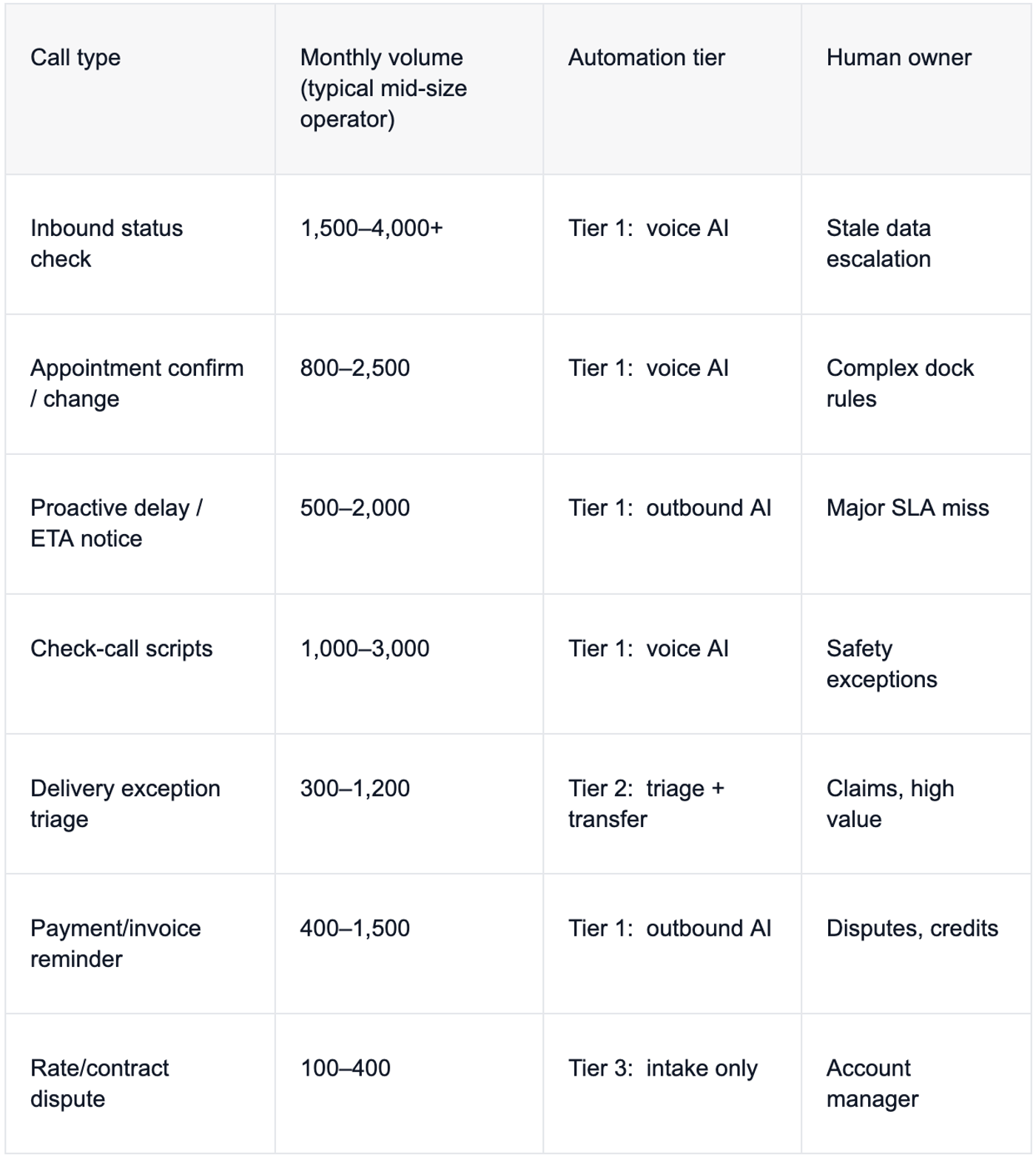
Tier-one containment, often sixty to seventy percent of status and confirm traffic, can move to automation without cutting coordinators. See reducing dispatcher call load by 70%.
How AI voice agents logistics workflows actually work
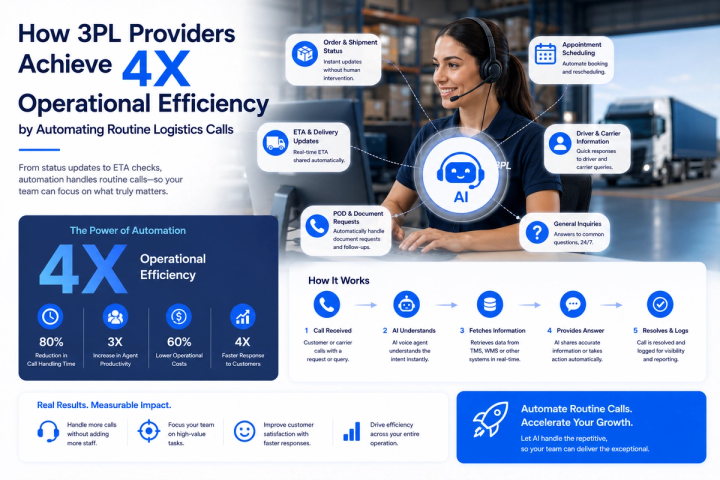
Logistics call automation is not a phone tree with a chatbot voice. Modern AI voice agents logistics teams deploy:
- authenticate callers by PRO, BOL, or account number
- look up TMS or WMS status in real time
- state honest ETA windows, not optimistic guesses
- confirm or reschedule appointments with write-back
- place proactive outbound delay and delivery notices
- warm-transfer to humans with transcript and load context
- log dispositions to CRM, ticketing, or AR queues
Conversational design matters: replacing phone trees with conversational voice AI and conversational services use cases.
Inbound logistics customer service at thousands of calls monthly
When shippers call, they want an answer in sixty seconds, not hold music and a callback tag. Voice AI answers overflow and after-hours lines, resolves tier-one logistics customer service requests, and escalates with context. That is transportation communication that scales: same team, more loads, shorter queues.
Exception triage before ops: reducing delivery exception calls before they reach the team. Proactive follow-up at 3PL scale: how 3PL providers scale customer follow-ups.
Outbound dispatch automation: proactive beats reactive
Most call storms are preventable. Dispatch automation via outbound voice AI triggers when:
- appointment window is at risk
- pickup or delivery missed the planned slot
- linehaul or customs slip changes ETA
- load delivered, confirm receipt and POD path
- spot quote or capacity check on new freight
Each call logs disposition and can send SMS recap, cutting repeat rings within two hours. Proactive outbound reduces inbound volume; that is core freight operations efficiency.
AR and collections: same phone bottleneck
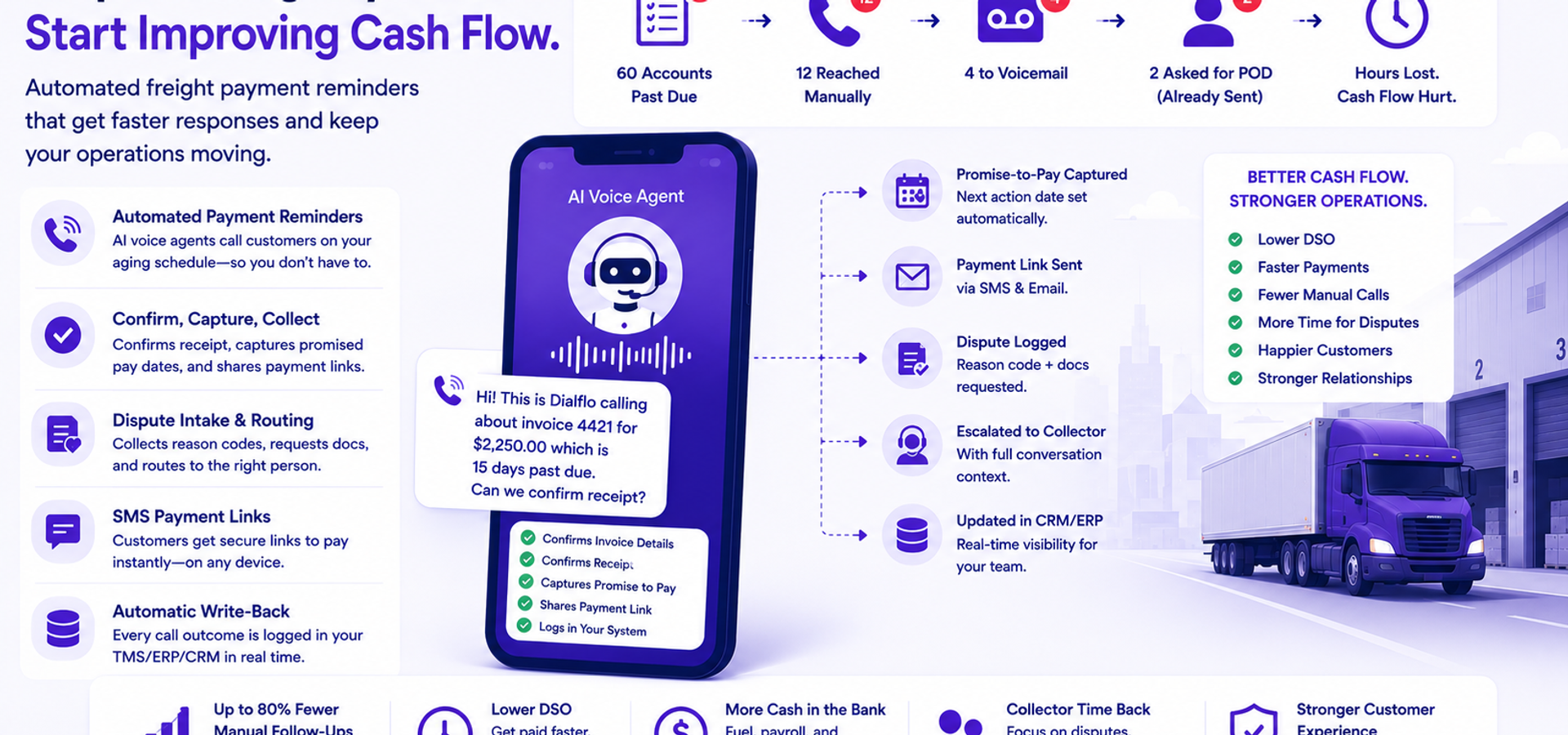
Invoice reminder calls compete with dispatch for coordinator time. Logistics call automation extends to AR tier-one: payment reminders, promise-to-pay capture, dispute intake. Deeper playbooks: automating freight payment reminder calls, reducing freight invoice follow-up calls by 80%, and manual AR follow-up hidden costs.
Integration stack for logistics voice AI
Thousands of calls monthly fail if the next shift replays the same conversation. Before pilot:
- define which events trigger outbound calls
- connect TMS or WMS as status source of truth
- map dispositions to ticketing or CRM fields
- set warm-transfer rules with load context
- measure repeat caller rate, spikes mean bad ETAs, not bad tone
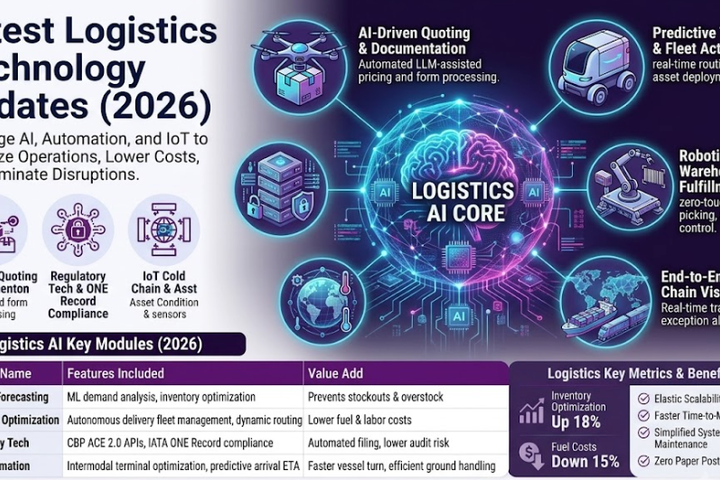
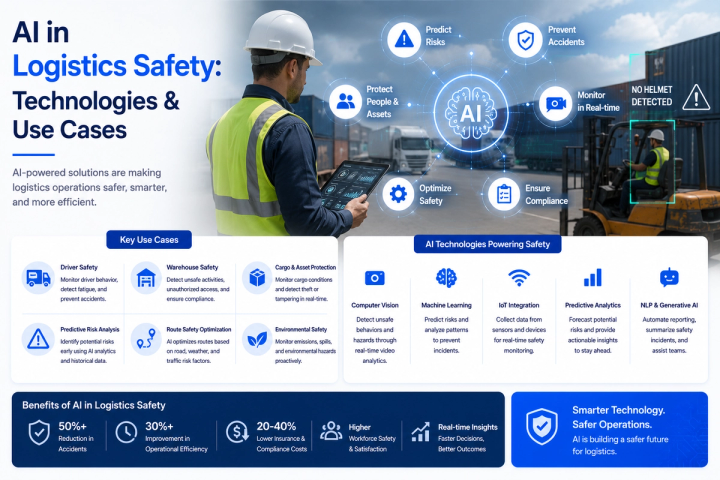
Broader context: AI in logistics use cases, technology used in supply chain management, AI supply chain technology trends, and the logistics decision gap. Build vs buy: build vs buy voice AI stack.
Four-week pilot: from hundreds to thousands of automated calls
Week 1: Count and tag call volume
Log inbound status, outbound confirm, delay notice, exception, AR reminder. Estimate coordinator hours per category. Target the highest-volume tier-one bucket first.
Week 2: Wire TMS read paths
Status, appointment, check-call scripts with read-only lookups. Validate ETA accuracy against ground truth.
Week 3: Launch on one lane or call type
Inbound overflow or proactive outbound delay calls. Humans on warm transfer. Measure answer rate and containment.
Week 4: Expand or fix data
If repeat callers spike, fix ETA sources. If containment holds, add lanes, after-hours lines, or AR reminders.
Metrics for AI voice agents logistics deployments
- total calls handled monthly (inbound + outbound)
- tier-one containment rate (AI resolved without human)
- average handle time vs human baseline
- inbound answer rate and hold time
- repeat caller rate within two hours
- loads per coordinator (productivity proxy)
- OTIF and customer satisfaction on pilot accounts
Industry context: J.D. Power business research on transportation customer experience; freight volume data from BTS statistical products. Supply chain ML context: machine learning in supply chain optimization.
Humans on exceptions: the design principle
AI voice agents logistics deployments succeed when automation is explicit about tiers:
Tier 1: automate fully: status readouts, appointment confirm, standard delay notice, payment reminder scripts.
Tier 2: triage then transfer: delivery exceptions, partial claims intake, angry caller de-escalation start.
Tier 3: human only: contract disputes, safety events, key-account relationship calls, complex detention negotiation.
Customers accept voice AI when answers are accurate and escalation is instant. They reject it when data is wrong or there is no escape hatch. That is logistics customer service design, not a technology preference.
Where Dialflo fits
Dialflo helps logistics companies handle thousands of routine calls monthly with AI voice agents that automate tier-one transportation communication, inbound status, outbound follow-up, appointment confirm, and AR reminders, with TMS-aware context, warm transfer, and structured write-back.
Use Dialflo when logistics call automation must scale without proportional hiring and your coordinators should focus on exceptions, not readouts. Pilot one call type on dialflo.ai.
FAQ: AI voice agents for logistics routine calls
What routine calls automate first?
Inbound status, appointment confirm, proactive delay notice, check calls.
How many calls per month can voice AI handle?
Thousands at concurrent scale, volume depends on tier mix and integration depth.
Does dispatch automation replace people?
No, it frees coordinators for exceptions and carrier work.
What systems must integrate?
TMS or WMS for truth, telephony, CRM or ticketing for dispositions.
How fast to pilot?
Often 2–4 weeks on one lane or call type.
How does Dialflo help?
Voice AI for routine logistics calls with ops write-back, see dialflo.ai.
Closing: thousands of routine calls, humans on what matters
Logistics companies do not win by answering the same question four thousand times a month manually. They win with AI voice agents logistics operations can audit, logistics call automation for tier-one volume, dispatch automation for proactive outreach, and humans on detention, claims, and relationships. That is how you improve freight operations efficiency and logistics customer service at the same time.
Ready to automate thousands of routine calls without adding desks? Explore Dialflo for AI voice agents built for logistics operations at scale.