Why AI Voice Assistants are Better than IVRs

Dialflo: AI Voice Agent
July 8, 2026
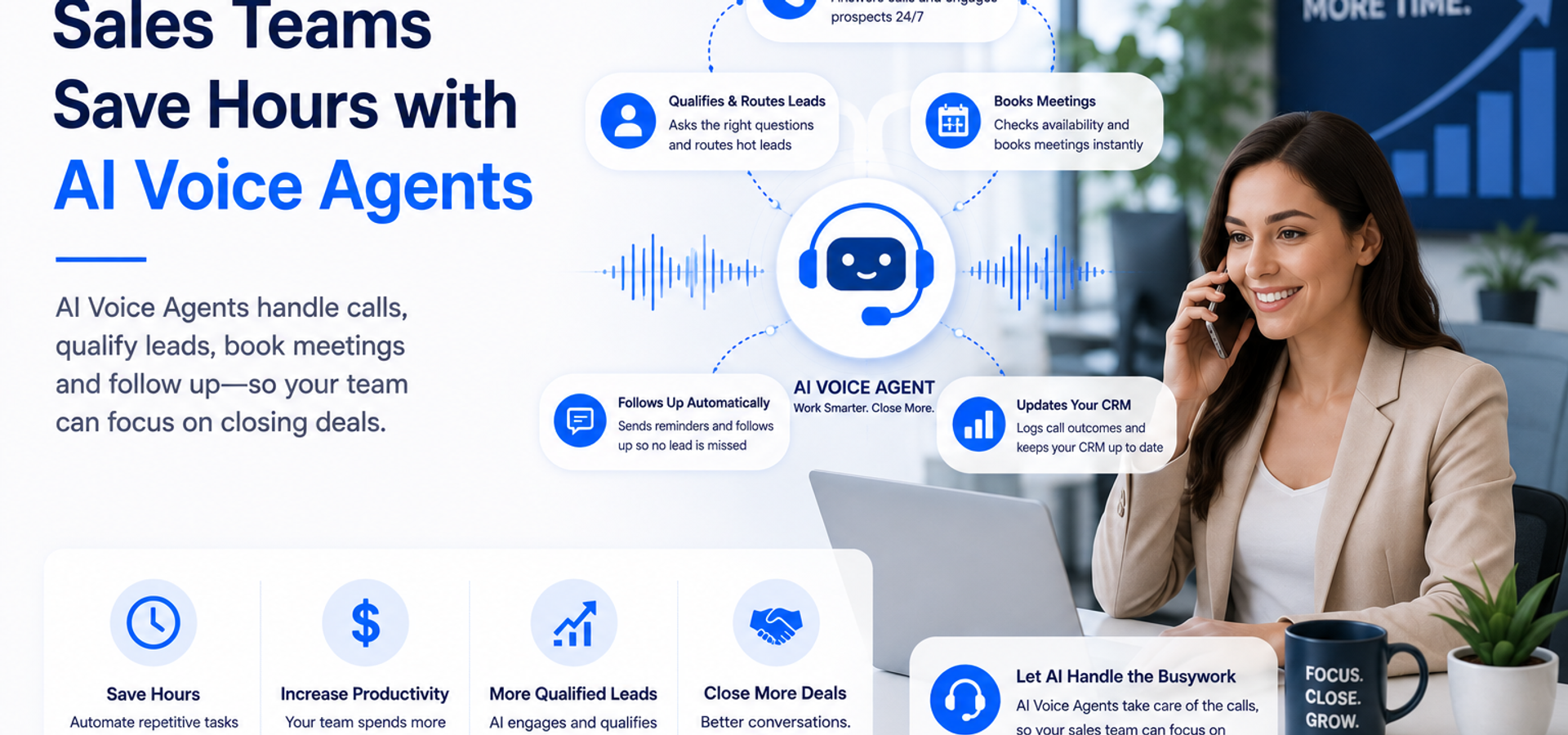
Short answer: In the AI voice assistant vs IVR comparison, conversational voice wins on the calls that matter most, callers speak naturally, get answers from live systems, and reach humans with context intact. Traditional IVR forces keypad menus and rigid trees that misroute intent, waste hold time, and train customers to mash zero. AI voice assistants resolve tier-one requests without "press 1 for sales," integrate dynamically with CRM and operations stacks, and hand off warm transfers instead of cold "what's this about?" moments.
Friday afternoon. You need a delivery update, not billing, not sales, not "other." The IVR offers nine options. None say dispatch. You press 3. Wrong queue. You press 0. Hold music. You explain the PRO number. The agent asks you to repeat it. You have now spent six minutes proving you are a customer.
That is not a people problem. It is an IVR problem. Interactive Voice Response made sense when touch-tone was the only scalable interface. Today, speech AI, integrations, and low-latency voice stacks make AI voice assistants the better front door for high-volume phone lines, if you deploy them on the right intents with human escalation designed in.
This guide explains why AI voice assistant vs IVR is not a cosmetic upgrade, it is a different architecture for phone automation, and how operations, sales, and staffing leaders migrate without wrecking caller trust.
What is IVR, and why callers learned to hate it
IVR (Interactive Voice Response) greets callers, plays prompts, collects keypad or basic speech input, and routes calls through a pre-built tree. IBM defines it as technology that lets systems interact with humans via voice and DTMF tones, a contact center staple for decades. Source: IBM: What is interactive voice response?
IVR fails callers when:
- menu options do not match real intent
- trees run four layers deep before a human appears
- account lookup requires sixteen-digit entry on a highway
- every transfer restarts the story from zero
- after-hours means voicemail with no resolution
IVR is not evil, it is brittle. It assumes callers know your org chart before they know their problem.
What is an AI voice assistant on phone lines?
An AI voice assistant (often deployed as an AI voice agent in production) listens and speaks on live calls using conversational AI, understanding intent, asking clarifying questions, retrieving data, completing workflows, and escalating with transcript context.
Unlike phone menus, it accepts: "Where is shipment 8841?" or "I need to move my Tuesday demo." No guessing between press 2 and press 5.
Foundational concepts: conversational services: what they are & use cases. Agentic orchestration parallels: how AI agents transform operations.
AI voice assistant vs IVR: the core architectural difference
IVR is a decision tree. Every branch is pre-authored. New intents require new prompts, new DTMF paths, new testing cycles.
AI voice assistants are intent engines plus integrations. Callers vary phrasing; the system maps to workflows, lookup, schedule, qualify, escalate, grounded in your CRM, TMS, ATS, or calendar.
In the AI voice assistant vs IVR frame, think routing versus resolution. IVR mostly routes. Modern voice assistants often resolve tier-one calls entirely before a human sees the queue.
Ten reasons AI voice assistants beat traditional IVR
1. Natural language beats phone menus
Callers describe problems in their words. AI understands paraphrase; IVR punishes anyone whose issue does not fit a button.
2. Faster path to answers, not just faster hold music
Good AI answers in seconds with system-backed truth. IVR often queues you to wait for a human to read the same data aloud.
3. Dynamic follow-up questions
AI asks only what is missing, appointment window, reference number, callback number. IVR walks everyone through the same script.
4. Integration without brittle branches
Connect CRM, TMS, WMS, calendars, ticketing. Logistics example: AI in logistics use cases. IVR integrations tend to be rigid "enter account number" flows that break when data is messy.
5. Warm handoffs with context
AI transfers with transcript, captured fields, and intent summary. IVR dumps callers on agents who ask "how can I help?" again. Forrester links reduced customer effort to loyalty when journeys remove loops. Source: Forrester: Customer service research.
6. Higher containment on tier-one intents
Status readouts, appointment confirms, qualification questions, AI contains without queueing. IVR containment often means "leave a message."
7. Works in noisy environments
Drivers, warehouses, and field sales call from loud backgrounds. Modern speech stacks handle barge-in and noise better than legacy DTMF-only IVR, when tuned for production.
8. After-hours coverage that actually helps
AI resolves or schedules overnight. IVR after-hours is frequently "call back Monday", while competitors answer.
9. Faster iteration when business changes
New product line or dispatch rule? Update prompts and integrations. IVR retrees mean weeks of telecom programming.
10. Better metrics for operators
Track containment by intent, transfer quality, repeat-call rate, and time-to-resolution, not just average speed to answer a queue IVR created.
AI voice assistant vs IVR: side-by-side on what operators care about
Caller experience: IVR = navigate our structure. AI = describe your problem.
Self-service depth: IVR = shallow lookups. AI = multi-step workflows with write-back.
Misroute rate: IVR = high when menus lag org reality. AI = lower when intent models are tuned on real calls.
Agent load: IVR routes volume; AI absorbs volume. Agents handle exceptions, not readouts.
Implementation time: IVR trees look fast until change requests pile up. AI pilots focus on one queue in weeks when integrations are scoped.
Cost narrative: IVR feels cheap until hold time, repeat calls, and churn cost more than the license. McKinsey frames AI-enabled service as capacity unlock when automation targets the right work. Source: McKinsey: AI-enabled customer service.
Where IVR still earns a place (honest comparison)
Credible AI voice assistant vs IVR guides do not claim IVR is dead. Keep short IVR when:
- you need a ten-second closed-hours message
- language selection is binary and stable
- compliance requires fixed verbatim disclaimers
- call volume is tiny and menus never change
Replace or augment IVR when callers routinely press zero, repeat themselves, or abandon during menus, signals the tree is fighting reality.
Decision discipline on automation scope: logistics decision gap in AI operations.
Use cases where AI voice assistants crush IVR
Logistics and operations phones
Shipment status, ETA, appointment confirm, driver check calls, callers speak PRO numbers and gate questions naturally. IVR menus rarely match dispatch vocabulary. Stack context: technology used in supply chain management.
Sales and lead qualification
Speed-to-lead and ISA qualification need conversation, not "press 1 if you filled a form." See real estate lead qualification voice workflows for a vertical example of why menus fail intent capture.
Staffing and recruiting lines
Candidates call about shift status, interview times, and onboarding docs, unpredictable questions. AI handles variable intent; IVR sends everyone to the same overloaded recruiter queue. Recruiting automation context: AI in recruitment and AI staffing.
How to migrate from IVR to AI voice assistants without breaking production
Do not rip out your entire phone tree on a Friday. Run this sequence:
Step 1: Instrument your IVR pain
Log zero-press rate, misroute transfers, average handle time on IVR-then-agent calls, and repeat callers same day. Pick the worst queue.
Step 2: Pilot one intent on AI
Status on reference number, appointment confirm, or inbound lead callback, high volume, clear success criteria.
Step 3: Integrate one system of record
CRM, TMS, ATS, or calendar. AI without data is confident nonsense, worse than IVR.
Step 4: Parallel run with shadow review
AI answers; supervisors review transcripts. Tune escalation and fields before full traffic.
Step 5: Retire the worst menu branches
Send tier-one callers to AI first; keep a short "press 0 for agent" escape hatch.
Migration playbooks: migrate voice stacks without downtime. Build vs buy: build vs buy voice AI stack.
Metrics to prove AI voice assistant vs IVR ROI
- Containment rate: resolved without human, by intent
- Zero-press / abandon rate: should fall vs IVR baseline
- Average speed to answer: immediate on AI-handled tier-one
- Transfer acceptance: agents should not reject AI handoffs
- Repeat-call rate: same issue, same day
- Customer effort score: post-call on escalated cohort
- Cost per contact: all-in telephony + platform
Gartner's customer service research emphasizes reducing effort, not adding automation hoops. See: Gartner: Customer service insights.
Vendor evaluation: not all "AI IVR" is conversational
Legacy vendors bolt speech onto old trees and call it AI. In a real AI voice assistant vs IVR pilot, test:
- natural paraphrase, not only keyword spotting
- latency tail on interruptions
- write-back to your systems
- warm transfer in a live demo
- concurrency at your peak hour
Compare platforms: Retell vs Dialflo, Retell vs Dialflo vs Vapi, best Retell alternative for India, Vapi alternatives for India. Pricing: Retell vs Dialflo India pricing.
Common migration mistakes
- Skinning IVR with a chatbot voice: still a tree, still brittle
- No human escape hatch: destroys trust faster than hold music
- Automating tier-two too early: disputes and negotiations need people
- Ignoring write-back: repeat calls erase ROI
- One-week pilots: run three to four weeks across call types
Where Dialflo fits: AI voice assistants that replace phone-tree pain
Dialflo provides production-grade AI voice agents, the practical form of AI voice assistants for phone-heavy teams ready to move beyond IVR. Dialflo answers in natural language, looks up operational and CRM data, completes workflows, and escalates warm to humans with full context.
Logistics coordinators, sales leaders, and staffing operators choose Dialflo when callers hate the menu but the business cannot hire unlimited agents to absorb volume. In the AI voice assistant vs IVR decision, Dialflo is built for resolution, not another layer of press 1.
India telephony and latency context: Retell review for Indian teams (measurement discipline applies across regions).
FAQ: AI voice assistant vs IVR
Is an AI voice assistant the same as AI IVR?
Marketing overlaps. AI IVR sometimes means speech on top of menus. True AI voice assistants pursue conversational resolution with integrations, not only routing.
Will customers hate AI as much as IVR?
They hate friction. Fast, accurate answers with easy human exit beat slow menus. Bad AI that loops without escalation is IVR with a new accent.
Can we keep our current phone number?
Yes. Most migrations forward existing numbers to AI-first flows while retaining backup queues.
How long does IVR replacement take?
Single-queue pilots often go live in two to four weeks with scoped integrations, not multi-quarter IVR reprogramming projects.
What intents should leave IVR first?
High-volume, low-judgment: status, scheduling, qualification, reminders. Keep humans on exceptions.
How does Dialflo help teams move beyond IVR?
Dialflo AI voice agents for conversational phone automation, see dialflo.ai.
Closing: callers do not want menus, they want outcomes
The AI voice assistant vs IVR debate ends where customer effort drops. Phone trees made sense when touch-tone was the only scalable UI. Today, conversational voice with system integrations resolves tier-one calls faster, misroutes less, and hands humans context instead of confusion.
If your IVR trains people to mash zero, you are not saving labor, you are taxing loyalty. Upgrade the front door.
Ready to pilot beyond press 1? Talk to Dialflo about replacing your worst IVR queue with an AI voice assistant, natural language, CRM or TMS lookup, warm escalation, and metrics that prove containment in 30 days. Start with one intent. Retire the menu branch that hurts most.