Recruitment Management: Process, Tools & Best Practices

Dialflo: AI Voice Agent
June 17, 2026
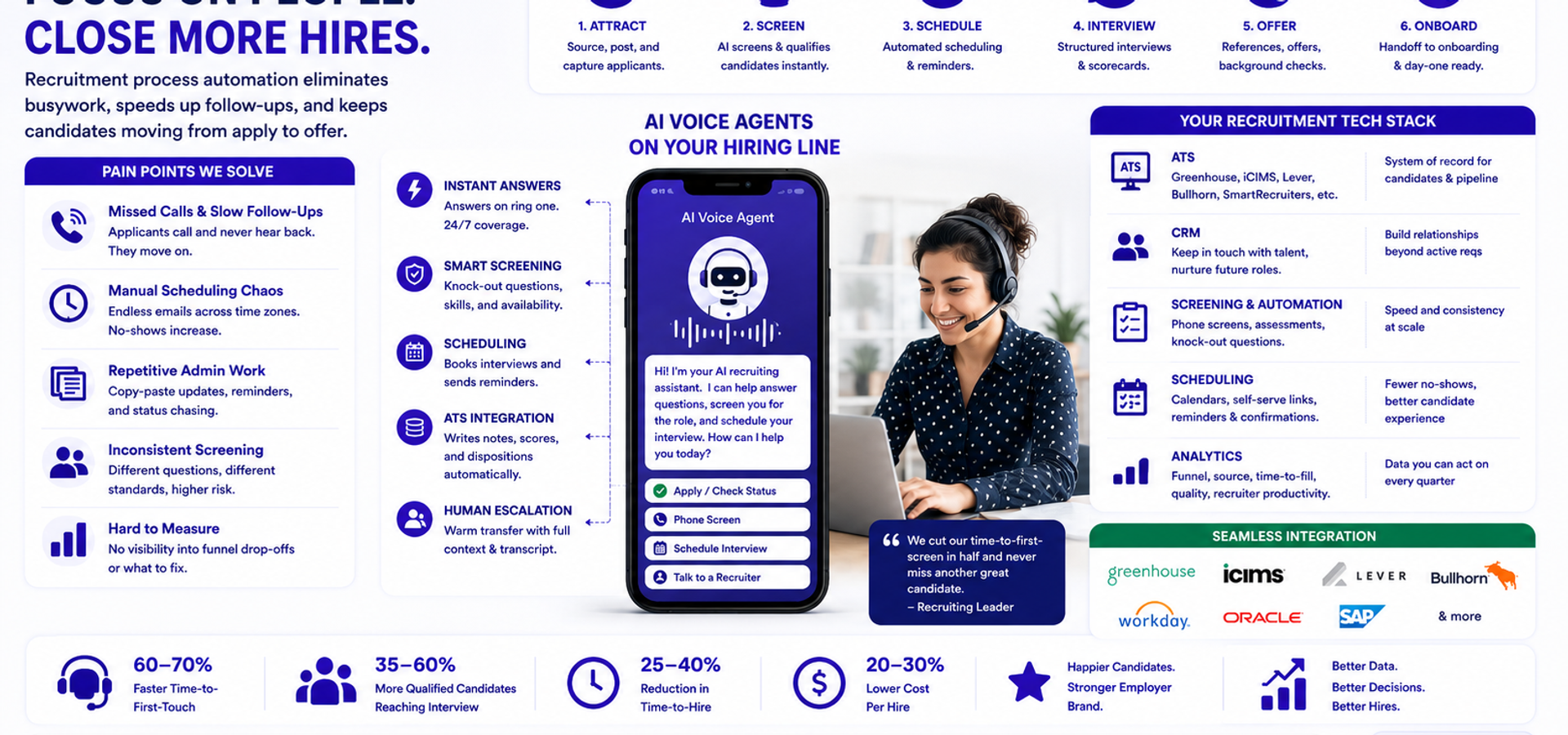
You posted a role three weeks ago. Sourcing lives in one tab, screening notes in another, hiring managers chase updates on Slack, and twelve qualified applicants never got a first call because the desk was underwater. That is what happens when hiring runs on heroics instead of recruitment management, a deliberate system for how you find, evaluate, and close candidates.
This guide covers the recruitment management process, the tools teams actually use (ATS, CRM, analytics, automation), and best practices that keep speed and quality from trading places. Whether you run corporate HR or a staffing agency, the goal is the same: fewer dropped candidates, clearer decisions, and a funnel you can improve every quarter.
What recruitment management means
Recruitment management is how an organization plans headcount, attracts applicants, moves them through a structured pipeline, and hands off successful hires to onboarding, with documentation, compliance, and metrics at every step.
It is broader than “posting on job boards.” It includes:
- workforce planning tied to business goals
- sourcing strategy and employer brand
- screening and interview design
- offer, background, and start-date coordination
- reporting on time-to-fill, cost, and quality of hire
Foundation read: artificial intelligence in recruitment and building an agentic hiring organization.
The recruitment management process (stage by stage)
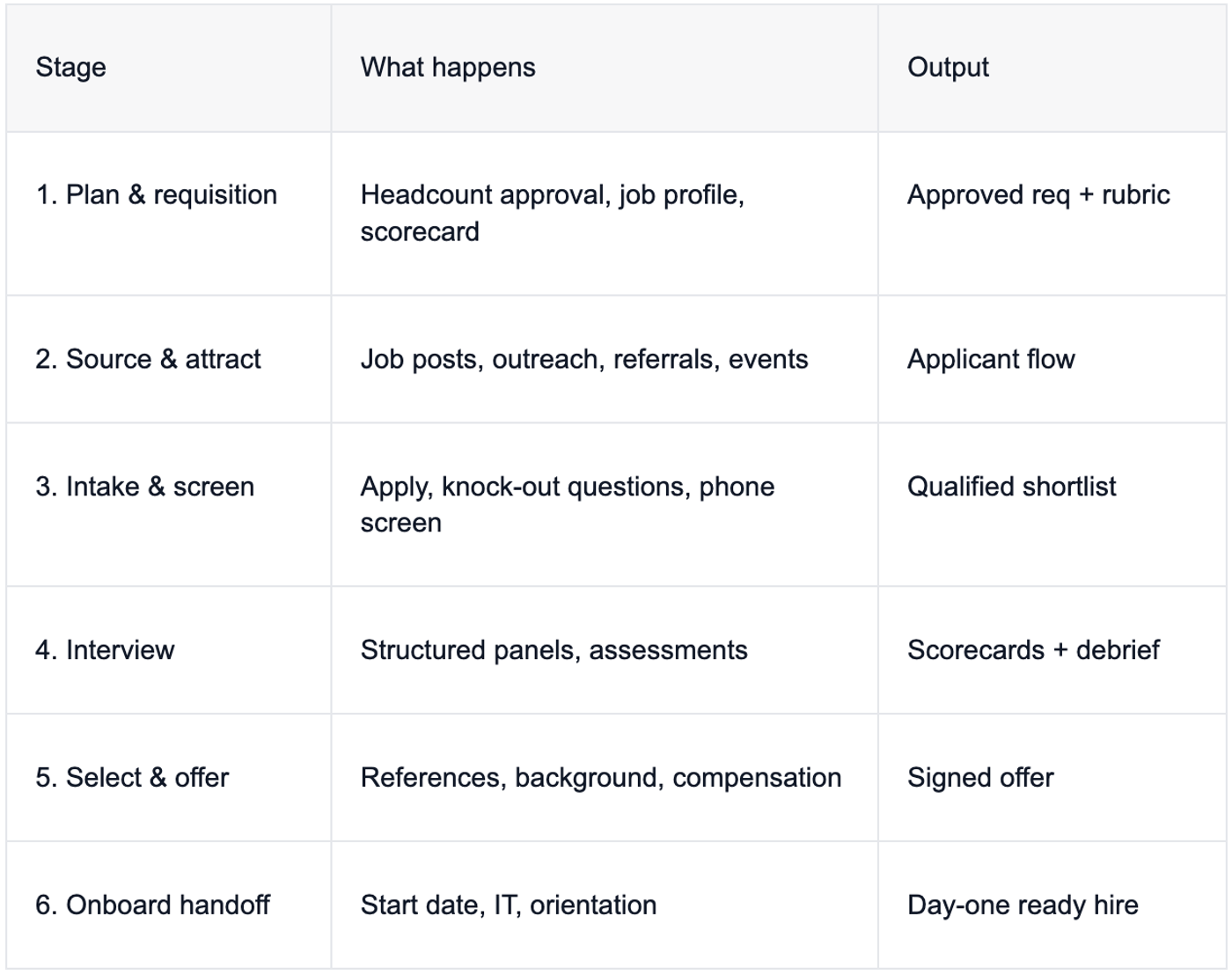
Most leakage happens between stages 2 and 3, applicants apply but never hear back. Speed tools: hire candidates faster with AI tools and AI sourcing: find candidates faster.
Recruitment management tools: what belongs in your stack
1) Applicant tracking system (ATS)
System of record for reqs, candidates, stages, compliance, and reporting. Compare options: ATS for staffing agencies compared and Gem ATS review.
2) Talent CRM / candidate relationship management
Nurture silver medalists, redeploy talent, and run long-cycle pipelines, especially for agencies. See candidate relationship management system and candidate sourcing services.
3) Sourcing and job marketing
Job boards, LinkedIn, programmatic spend, referral programs. Staffing lens: AI staffing and cloud-based recruitment software.
4) Screening and automation
Knock-out forms, skills tests, and high-volume phone screens. Depth: AI applicant screening and best automated screening software for staffing agencies.
5) Interview operations
Scheduling, question banks, scorecards, debrief discipline. Prep: generate interview questions from job description using AI. Analysis: interview intelligence and AI candidate performance.
6) Recruitment analytics
Funnel conversion, source quality, time-to-fill, recruiter productivity. Guide: recruitment analytics software and machine learning in recruiting.
7) HRIS and broader HR stack
Payroll, onboarding, and employee records after hire. Context: HR software solutions. Integration: integrate recruiting software with existing systems.
Best practices that actually move metrics
Define the scorecard before you source
Hiring managers and recruiters align on must-have skills, knock-out criteria, and interview rubric before the req goes live, so screening stays consistent and debriefs do not relitigate basics.
Protect time-to-first-touch
Applicants who wait a week for a response ghost you. Set SLAs: acknowledge within 24 hours, screen within 48–72 for high-volume roles. Voice AI can run first-pass phone screens when recruiters cannot keep pace, see how AI agents are transforming recruiting and AI agents for recruitment comparison.
Automate repetitive work, not final judgment
Automate scheduling, confirmations, reminder calls, and structured intake. Keep humans on final interviews, culture fit, and offers. Compare agent platforms: AI agents for recruitment.
Run structured interviews
Same core questions per role; score immediately; debrief with evidence, not vibes. Reduces bias and speeds decisions.
If you are building interview scorecards from scratch, Google's re:Work guide to structured interviewing is a practical starting point for consistent questions and rating scales.
Measure the funnel, not vanity metrics
Track apply → screen → interview → offer → accept by source and recruiter. Fix the stage with the biggest drop-off.
Communicate like candidates are customers
Clear timelines, rejection notes where possible, and no ghosting after interviews. CRM nurture keeps warm talent for the next req.
Audit AI for fairness and transparency
If screening or interview AI influences decisions, document what it scores, allow human override, and avoid black-box rankings without job-related criteria.
Regulators are moving in the same direction. New York City's Local Law 144 requires employers that use automated employment decision tools to commission a bias audit within a year of use and notify candidates, and the EU AI Act classes AI used to screen or evaluate job candidates as high-risk.
Recruitment management for staffing agencies vs employers
Staffing agencies juggle multiple clients, submittal SLAs, and redeployment, ATS + CRM + fast phone throughput dominate. Read automated screening for staffing agencies.
Corporate employers emphasize employer brand, internal mobility, and compliance with corporate HRIS. High-volume hourly hiring (retail, warehouse, clinics) benefits from walk-in events plus phone automation, see open interviews near me today for candidate-side context on same-day hiring windows.
Common recruitment management mistakes
- ATS configured but recruiters still live in email and spreadsheets
- no scorecard, every interviewer asks different questions
- sourcing without screening capacity, pipeline floods, quality drops
- ignoring silver medalists, rebuilding pipelines from zero each req
- buying point tools that never integrate with ATS write-back
- measuring activity (calls made) instead of outcomes (accept rate)
Where Dialflo fits in recruitment management
Dialflo is not an ATS, it is AI voice execution for recruiting: structured phone screens, applicant confirmations, reschedules, and high-volume intake with outcomes synced to your ATS or CRM. Use it when your recruitment management bottleneck is phone throughput and missed-call leakage, not when you need a new tracking system.
Teams pair Dialflo with existing ATS workflows so recruiters spend time on interviews and offers, not playing phone tag with fifty applicants. Explore capabilities on dialflo.ai.
FAQ: Recruitment management
What is recruitment management?
End-to-end hiring, plan, source, screen, interview, offer, onboard, with process, tools, and metrics.
What is the most important recruitment tool?
A well-used ATS as system of record, everything else integrates with it.
How do you improve time-to-fill?
Faster first-touch, parallel interview scheduling, pre-approved scorecards, and fix the funnel stage with highest drop-off.
Should small teams buy enterprise ATS?
Match tool complexity to req volume; integrate early so you do not migrate chaos later.
Where does AI help most?
Sourcing, screening, phone intake, scheduling, and analytics, not replacing final hire decisions.
How does Dialflo help?
Voice AI for phone screens and recruiting call workflows, visit dialflo.ai.
Closing: recruitment management is a system, not a hustle
Strong recruitment management means every candidate knows where they stand, every hiring manager works from the same scorecard, and every leader can see which source and stage actually delivers hires.
Fix the process first. Wire the tools second. Automate the repetitive phone work third. Ready to unblock high-volume screening? Contact Dialflo for AI voice agents that write back to the ATS you already run.


